Alex Hochstrasser Talks Bilibo at 25: The Long Game of Play
by The Bloom Report | 25 Mar 2026
The Bloom Report
Hey Alex, thank you for taking the time to speak with us. So Bilibo turns 25 this year. What surprised you most about its longevity?
Alex: Probably that it still feels current.
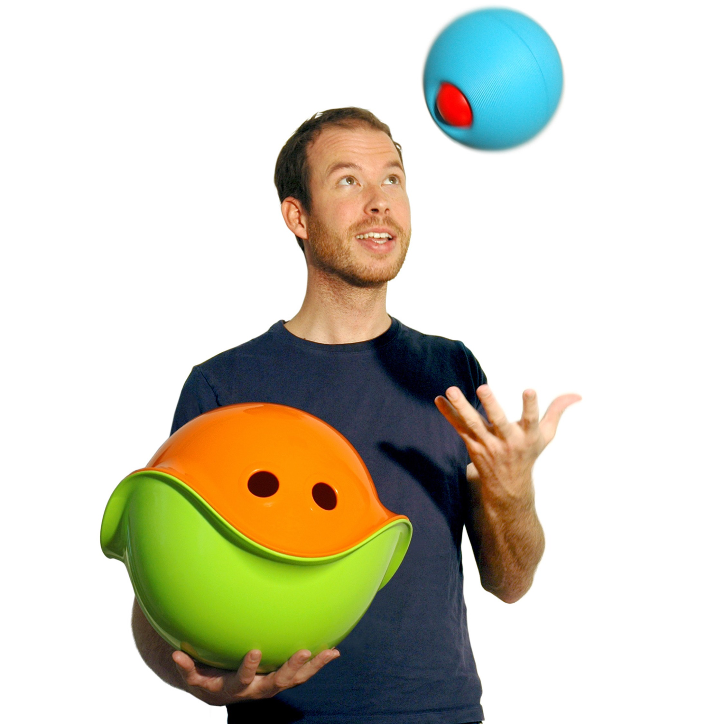
When I designed it, I wasn't trying to future-proof it. I was trying to strip away anything with an expiration date – no characters, no built-in story, no trend references. Just a shape that taps into something children have always done: pick up an interesting object and figure it out.
It never quite fit in. That turned out to be an advantage.

Never fit in how?
Alex: When I was looking for a manufacturer after graduating, I quickly realized that a product without a clear category makes people uncomfortable. It's not a vehicle, not a figure, not a construction toy. Nobody quite knew which shelf to put it on.
At the TOTY Awards in 2010, I overheard a woman wondering loudly why there was a salad bowl among the nominees for Preschool Toy of the Year. Bilibo won. I still think about that woman. She wasn't wrong about what it looks like. She just missed what it does.
How did a design thesis turn into a company?
Alex: By necessity, not by plan.
When no manufacturer would take it on without changes I wasn't willing to make, it became clear that producing it myself was the only way to pursue the idea without compromising it. Starting a company wasn’t a romantic decision. It was the price of doing it properly.
That mindset is still there. Independence is what allows us to stay consistent – even when consistency isn't the easiest path.
Your work is often described as simple. What does that mean in practice?
Alex: Simple is usually the result of a lot of editing.
With something like Bilibo, every detail carries weight. The two eyes that give it personality and direction. The way two identical shells join to form a smiling sphere. The flexibility of the material. Even the sound it makes when it hits the floor.
You're not adding features – you're removing everything that doesn't belong. Good design should feel obvious in the end, but it rarely starts that way.
Bilibo and the first iPod launched the same month. Both won a Design Distinction Award in I.D. Magazine's 2002 review. What do you make of that company?
Alex: It's a good piece of trivia – and maybe slightly more than that.
Two very different objects, but a similar instinct underneath: reduce things to an intuitive core, trust the user, resist the urge to explain. Apple's pitch was a thousand songs in your pocket. Radical simplicity that expanded possibilities rather than limiting them. That's not a bad description of what we were trying to do with a piece of plastic.
Apple has always been a reference point for me. The confident minimalism, the patience to let the design speak quietly rather than shout.
The iPod is long gone. Bilibo is still here. I'm not drawing too grand a conclusion from that – but longevity usually comes from getting the fundamentals right, not from adding more.
"Open-ended play" is everywhere now. What does it actually mean in your work?
Alex: For us it's the foundation, not a label.
We try to design objects that don't dictate a single use. The moment a toy tells you exactly what it is, it also tells you what it isn't. That's where things close down.
With Bilibo, the physical interaction is immediate – sit, spin, balance, wobble. But the symbolic meaning stays open. It can be a shell, a helmet, a mountain, a bowl, a pond. That openness allows the same object to mean something different as the child grows. A two-year-old uses it differently than a five-year-old, who uses it differently than a ten-year-old.
The challenge in design terms is calibration. Too abstract and the object feels cold, uninviting. Too specific and you've done the child's thinking for them. You want just enough character to draw them in, and enough room for them to take over.
MOLUK has stayed deliberately small. Is that a choice or just what happened?
Alex: Very much a choice – and one we've had to make actively, more than once.
We've always been self-funded. No external investors, no venture capital, no sudden injection of cash to buy visibility. In the early years that was occasionally uncomfortable. In hindsight it was probably the best thing that could have happened. It forced us to be resourceful, to grow organically, to rely on word of mouth rather than marketing budgets. To earn each market slowly rather than buy our way into it.
You see the alternative play out regularly in this industry – a well-funded launch, a big splash, and then silence two years later. The money runs out, the buzz fades, and there's nothing underneath to sustain it. We never had that problem, because we never had that option.
I sometimes compare it to independent cinema versus studio productions. Both have their place, but they follow completely different logics. We're not trying to make blockbusters. We're trying to make things that last.
Bilibo has been selling steadily for 25 years. That's a very different model from chasing the next big hit – and a very different kind of satisfaction.
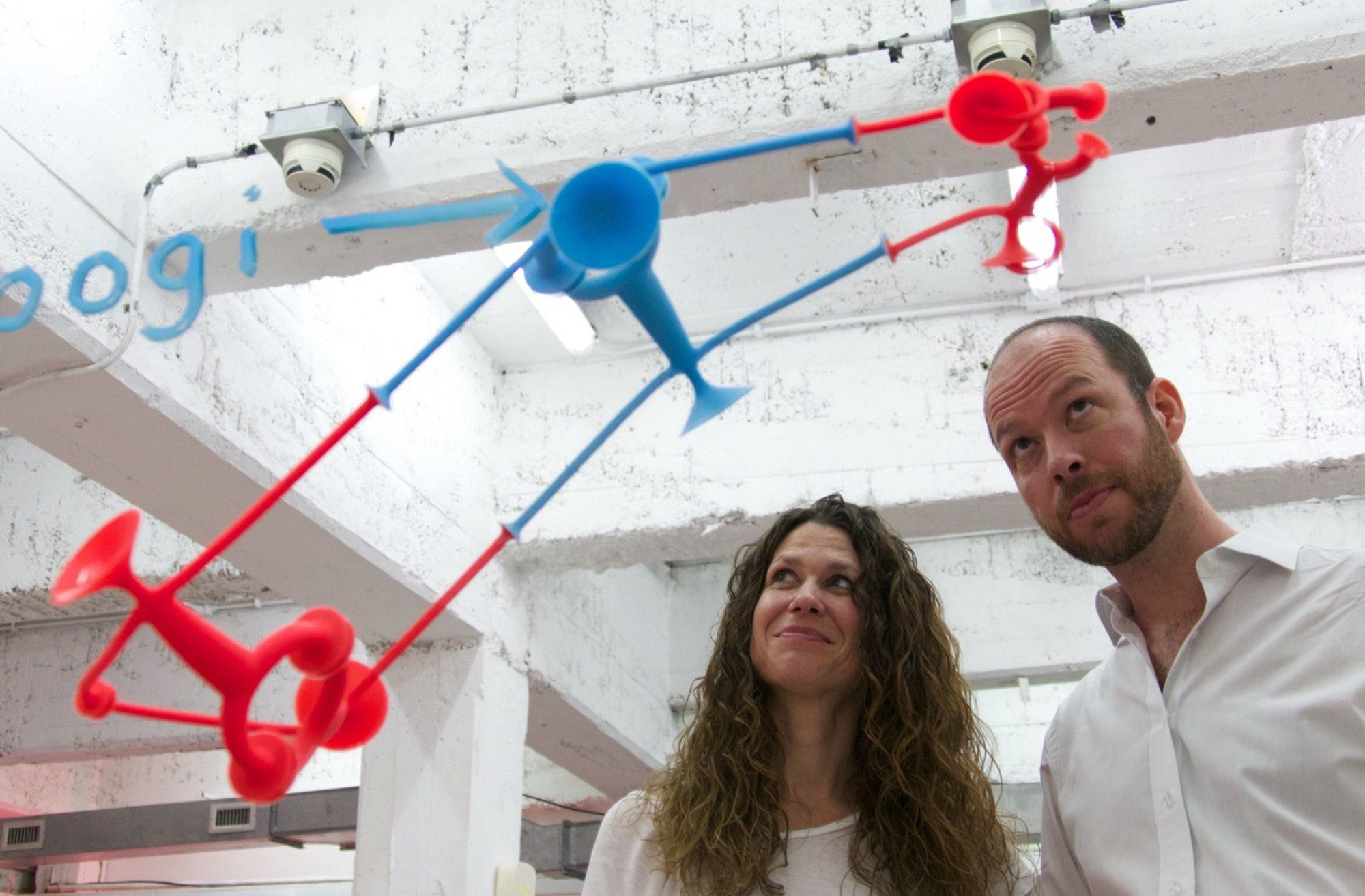
MOLUK is very much a family affair. Each year, their mother bakes MOLUK cookies for the booth at Spielwarenmesse in Nuremberg — a small tradition that has become something of a legend.
How do you deal with trends?
Alex: We mostly ignore them.
If you follow trends, you're always late. By the time something is visible enough to follow, it's already on its way out. We try to focus on more fundamental patterns – how children explore, balance, collect, invent stories. Those don't change much. The context changes. The underlying behavior is remarkably stable.

Why introduce Bilibo Midi and Bilibo Dots now, after 25 years?
Alex: The original Bilibo was developed with kindergarten-age children in mind. It works across a wide range of ages, but for a two-year-old it can feel slightly oversized – especially once they decide to use it as a container for everything they own.
Bilibo Midi is a better fit at that stage. Lighter, easier to handle, more portable. It gives younger children a real sense of control. When we tested the first prototypes, it felt immediately right – not like a new product, but like something that had always been missing.
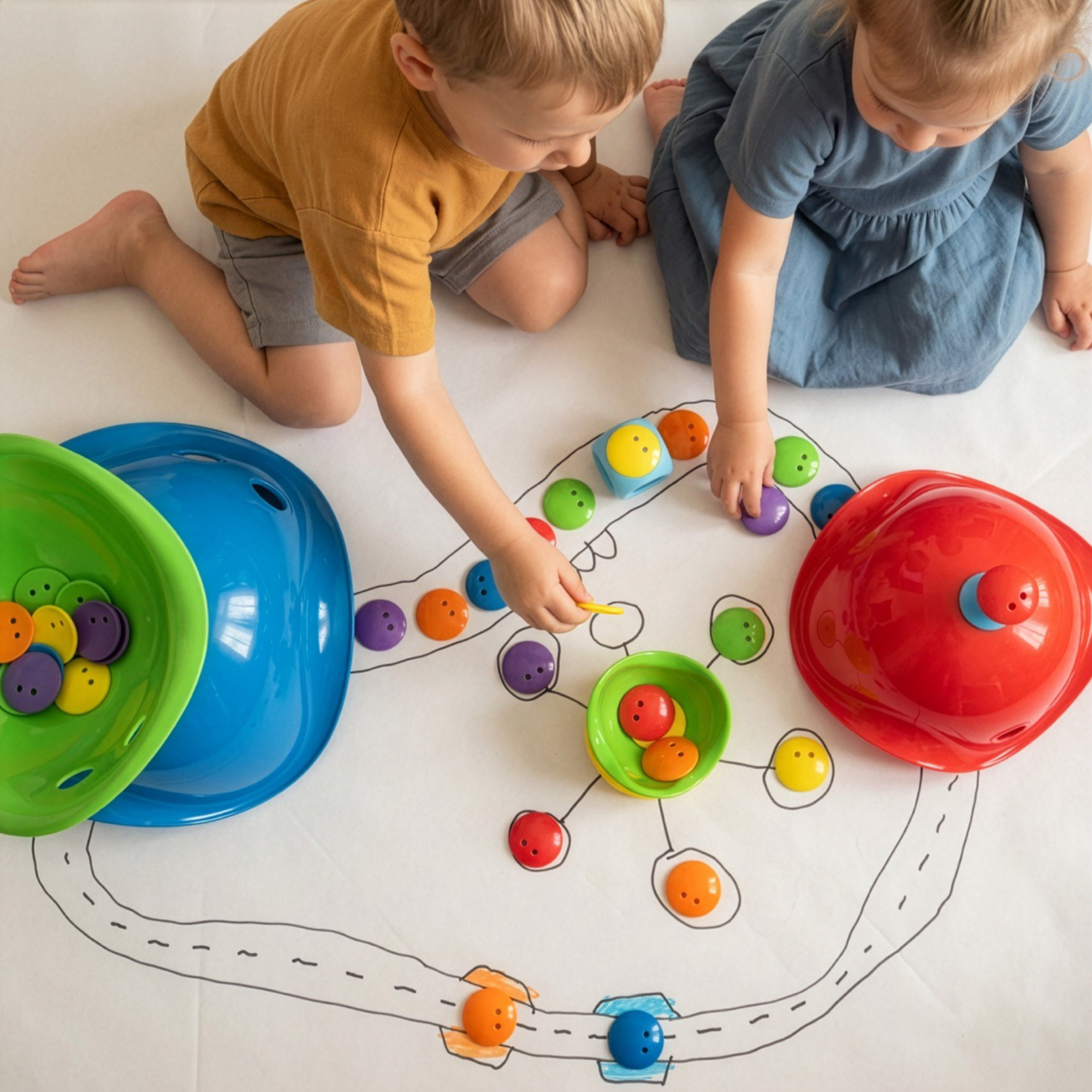
Bilibo Dots came from watching how naturally children create systems of value in play: collecting, sorting, counting, trading. The curved shape gives them a distinct physical and acoustic quality – they roll, spin, and interact in ways that are genuinely satisfying to handle.
What matters to me is that every new object feels inevitable. As if it was already part of the family, just waiting to be made. We're not interested in expanding the range for its own sake – we're interested in completing it.
What has Bilibo taught you over 25 years?
Alex: That children don't need more instructions. They need better tools.
If you give them something open enough and engaging enough, they will take it much further than you imagined. We once heard from a teenager who had kept his Bilibo since he was a toddler – still in his room, still in use. That kind of story tells you more about whether you got something right than any award does.
The challenge was never to impress them. It was to trust them.
What advice would you give to designers entering the toy industry today?
Alex: Pay attention to how children play with things that were never designed as toys.
There's a kind of honesty in that. If you can understand why a cardboard box outperforms a very sophisticated toy, you're probably asking the right questions.
Alex Hochstrasser is the founder of MOLUK and the inventor of Bilibo. MOLUK is based in Zürich, Switzerland. www.moluk.com

Recent Blogs




Recent Blogs
The Bloom Report
From Jabba’s Sail Barge to Mos Eisley: How HasLab Made the Impossible Possible
The Bloom Report
Steve Rad on TikTok Shop, Social Commerce and the Next Big Opportunity for the Toy Industry at the Chicago Toy and Game Fair!
General
Toys R Us is Back

The Bloom Report
David Becker and Dr. Amanda Gummer Talk Building Trust, Creating Demand and Helping Children's Brands Grow

Press Release
Plus-Plus USA Returns to the Chicago Toy & Game Fair, Bringing Hands - On Creative Play to Holiday Shoppers
See more
Recent Wiki
BOOK REVIEWS
Book Review: No Experience Necessary: Why Betting on Yourself in Your Twenties Is the Best Decision You’ll Ever Make by Ronnen Harary
PEOPLE
Chris Byrne Chats About His New Book "How To Cremate A Parakeet"
COMMENTARY AND OPINION EDITORIALS
The Toy Association & UIA’s Toy Hub Bring Toy & Game Inventors Together in LA

COMPANIES
“CARVE-X” MAKES LANDMARK MOVE TO THE JAVITS CENTER FOR TOY FAIR 2027
PITCHES: PRODUCT CONCEPTS FOR LICENSING & PRODUCTS FOR RETAIL
People of Play™ Announces Speaker Lineup for 2026 Global Inventor Pitch & Innovation Conference
See more
POP's Got Talent

POP Entertainment
Randy Klimpert Shares his Ukulele Collection
POP Entertainment
Steve Casino Peanut Art

POP Entertainment
Everyone's Talking about POP!

POP Entertainment
Princess Etch - a Multi-Talented Etch A Sketch Artist
POP Entertainment
Joseph Herscher of Joseph' s Machines.
See more
Recent POPcast

Hidden Role: The Brains Behind your Favorite Games
Brent Bushnell talks Two Bit Circus, VR, & STEAM (Part 1)

Hidden Role: The Brains Behind your Favorite Games
Tim Walsh Celebrates the 30th Anniversary of Blurt!
Hidden Role: The Brains Behind your Favorite Games
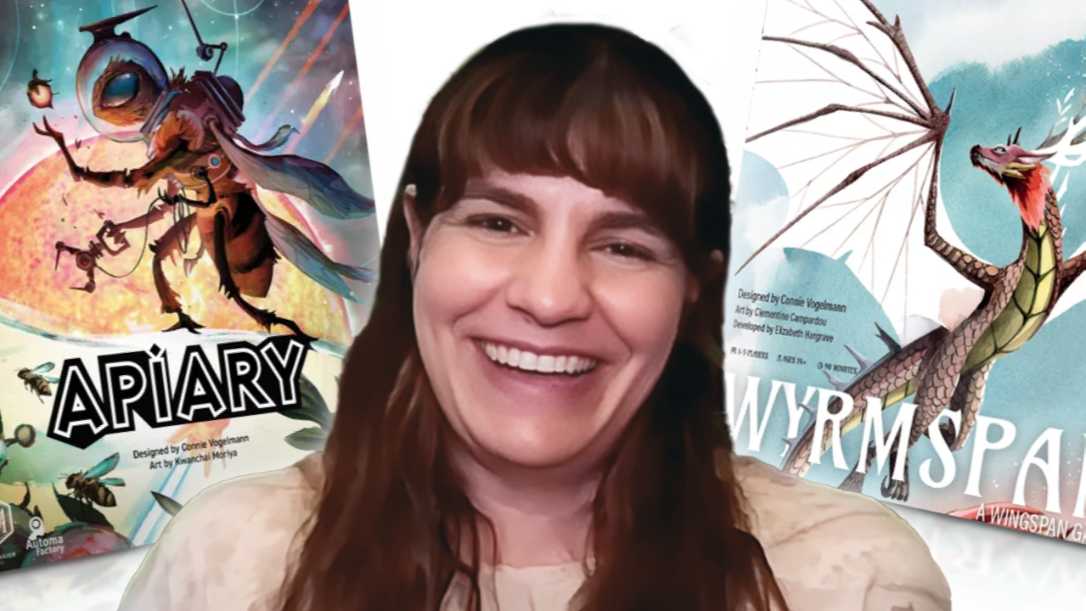
Connie Vogelmann designed Apiary & Wyrmspan!

Hidden Role: The Brains Behind your Favorite Games
Bob Fuhrer... Is THE Crocodile Dentist!

Hidden Role: The Brains Behind your Favorite Games
Tom Dusenberry... Bought Atari, Wizards of the Coast, and Avalon Hill!
See more
POPDuos

POPDuos: Interviews with Legends and Leaders
POPDuo: Richard Dickson, Mattel’s President & COO, and Kedar Narayan, Young Inventor Challenge AMB

POPDuos: Interviews with Legends and Leaders
POPDuo: Will Shortz and Josh Wardle

POPDuos: Legends and Leaders Explore Creativity
POP Duo: Elan Lee, Co-Founder, Exploding Kittens.and Jeff Probst, Host and Exec Producer, Survivor

POPDuos: Legends and Leaders Explore Creativity
POP Duo: David Fuhrer, MNG Director, Blue Sq Innovations & Shawn Green, past Dodgers & Mets MLB Star

POPDuos: Legends and Leaders Explore Creativity
POP Duo: Bob Fuhrer, Founder, Nextoy and Tom Fazio, Golf Course Designer
See more
Featured Articles
The Bloom Report
Toy Inventors--The Heart and Soul of the Industry
The Bloom Report
Brian Turtle: 'Endless' Stories, Advice, Kevin Bacon and More! tBR Person of the Week
Biographies and Interviews
Jonathan Levy on Jon2.0 - from Co-Founding Mastermind Toys to Spin Master
Biographies and Interviews
Andrew Perlmutter's Journey from Glencoe to Funko with Crazy Ideas that turned out Golden
See more