Daryl Andrews Talks Best in Play, Working with Inventors and More!
by Daryl Andrews | 08 Oct 2026
The Bloom Report
Hi Daryl! Looking forward to seeing you at the Inventor Pitch & Conference next month! Love your latest initiative! Best in Play describes itself as a “Strategic Tabletop Industry Agency.” What does that mean—and what did you and your partners see happening in the industry that made you believe a different kind of company was needed?
Best in Play is an agency built to work alongside publishers and help them find the talent, opportunities, and support they need to succeed. Our company has three main pillars: representing creatives—including designers, artists, editors, and writers—connecting brands and intellectual properties with tabletop opportunities, and providing services to publishers.We believe strongly in creative talent and in the idea that a rising tide lifts all boats. Investing in makers and supporting their unique points of view feels more important than ever. We also see brands and IP as opportunities to create thoughtful, bespoke experiences that connect with fandoms. Those audiences are looking for games that understand and celebrate what they love.
At the same time, the industry is changing. Tighter budgets make it harder for publishers to send people to every convention, while attending those events can be expensive and time-consuming for creatives. There are also more pitches competing for attention. AI and other tools can make a presentation look polished, which makes thoughtful evaluation and curation even more valuable. We saw an opportunity to help bridge those gaps. Publishers want great games and strong partners, but finding and developing those relationships takes time. Best in Play exists to make that process easier and help good people do more together.
Your team comes at tabletop from very different directions—game design, publishing, licensing, manufacturing, media, business leadership and more. How did this particular group come together, and what can you do collectively that none of you could do as effectively alone?
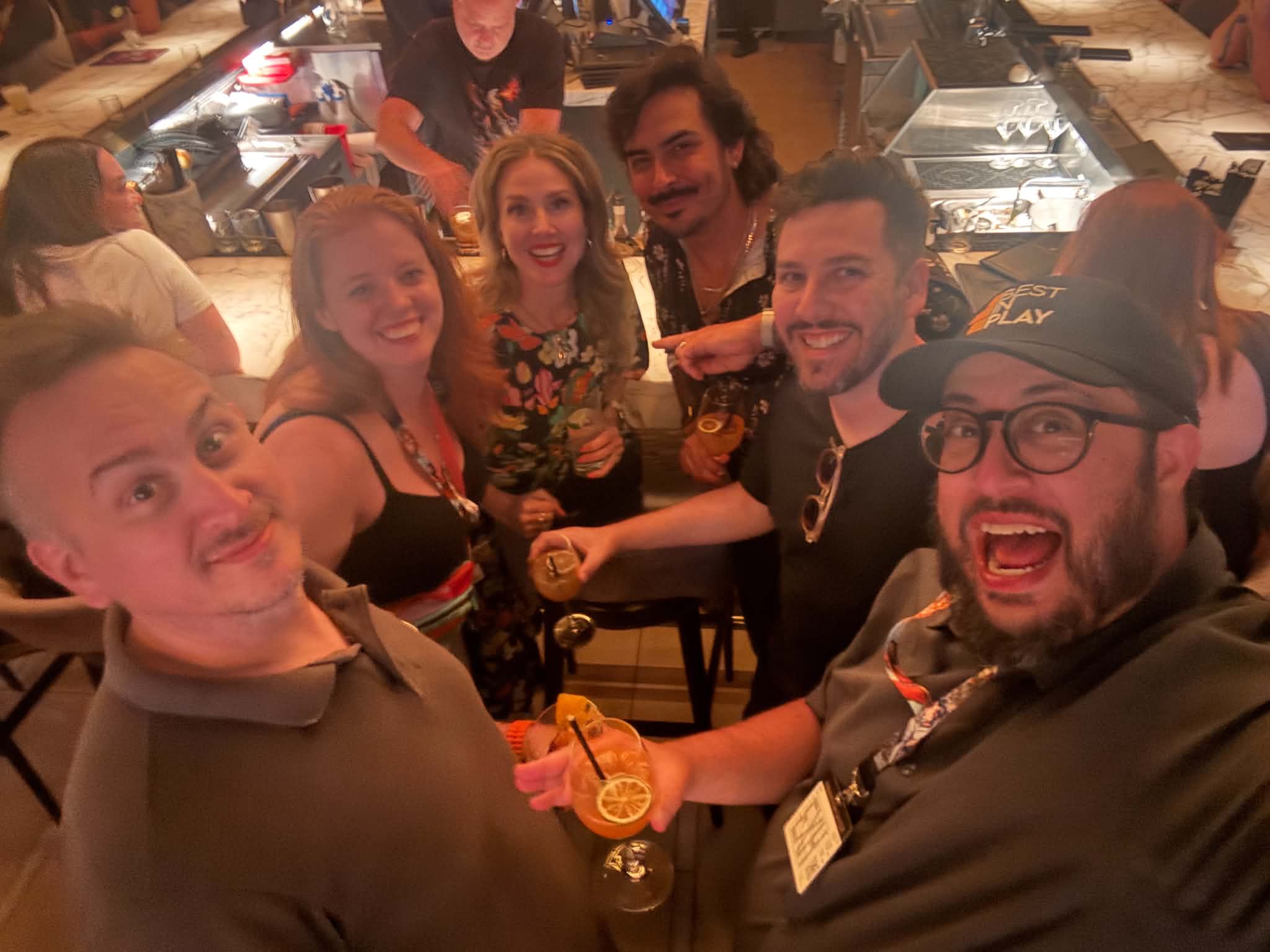
The idea really came together at Licensing Expo in Las Vegas in 2026. It was my fourth time attending. In previous years, I had represented specific game companies, but this time I went independently to explore opportunities. Around that time, brands had started approaching me directly about designing games and helping them find publishers. Scott Brady and David Gordon joined me at the show to see what those conversations looked like. David Du was also attending, and the four of us met several times throughout the event.
By the end of the show, Scott and David said, “By our count, there are roughly 200 different brand and IP opportunities here. How many do you think you’ll actually pursue?” I told them that perhaps two or three would become games I designed over the next year or two.
That conversation was the spark for Best in Play. We spent the rest of the evening imagining a company that could help more of those opportunities find the right creative talent and publishing partners. We also noticed how few tabletop companies were attending the show. There was a real gap, and we knew that making the right connections required years of investment in relationships and industry knowledge.Together, we could reach more people and make more of those connections happen. Our goal is to share opportunities across our networks. We know we can accomplish much more by bringing good people together.
I sometimes describe the team as a band. I’m the frontman, building relationships and getting our message out into the world, which fits my role as Director of Play. Nicole is our drummer, keeping us organized and on beat. Scott is our lead guitarist, meeting with designers and publishers and finding the fun—hence his title, Director of Fun. Erik, David Gordon, David Du, and our strategic partners are the crew making sure everything works behind the scenes and helping guide our strategy. As we grow, we may add a bass player or someone on the keys. We’re still a small team, but we’ve built a strong foundation with room to grow.
You say, “The right opportunity is usually one connection away.” Can you give us an example of what that might look like in practice—perhaps an inventor, publisher or IP owner coming to you with one need and discovering a solution?
Looking back on my years in the industry, I feel fortunate that so many opportunities began with being in the right place or knowing the right person. But those connections are only part of the story. You also have to put in the less glamorous hours: developing your craft, building technical skills, and learning the industry well enough to recognize an opportunity and deliver on it.
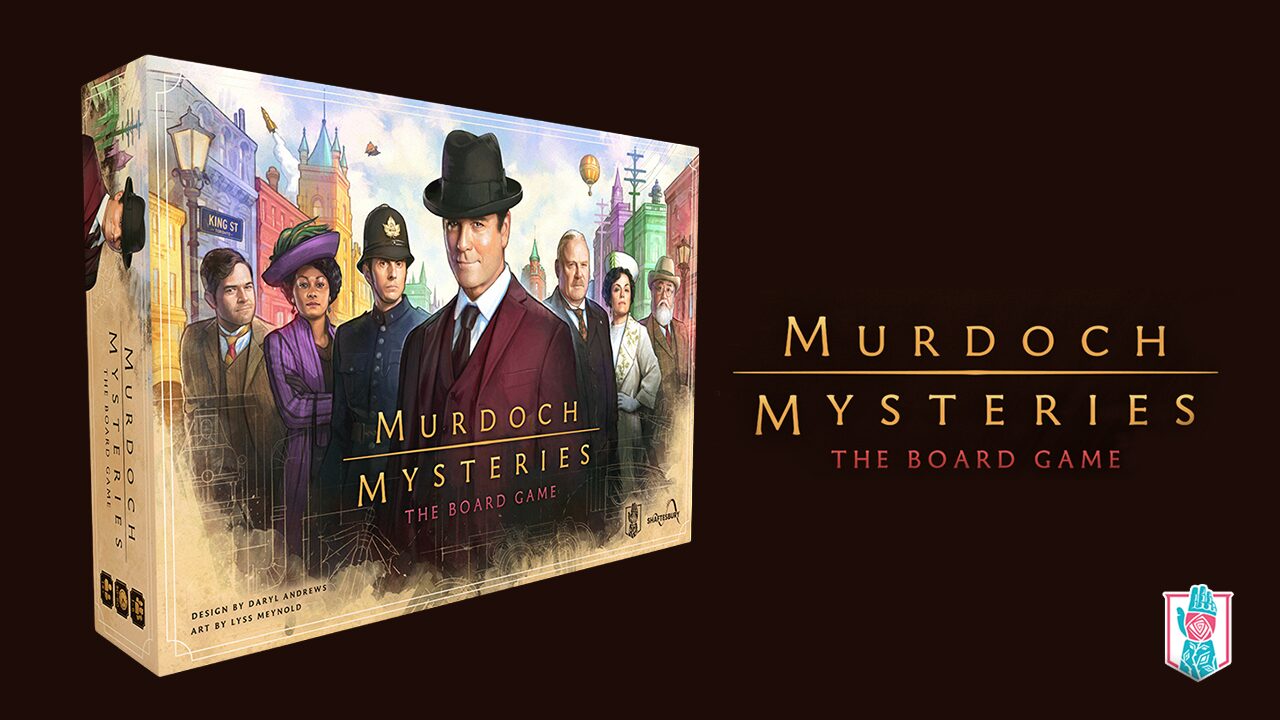
One example is Murdoch Mysteries. Some readers, particularly in the United States, may be less familiar with the series, but it has a devoted audience, especially in Canada and the UK. It is now in its 20th season, with more than 300 episodes—an incredible accomplishment. Jason Mewes (actor from movies like Jay&Silent Bob/Clerks), a self-described superfan, has also been championing the show, including through the official Murdoch Mysteries podcast. At the end of 2025, the showrunners approached me about creating a board game. Usually, a publisher contacts me to design a game around an IP, so this was a different starting point. Because I appreciated the show and knew publishers who might be interested, I offered to make some introductions. Rose Gauntlet Entertainment fell in love with the series and its potential as a game. They also brought me on as the designer, and the game is scheduled to launch through crowdfunding in early 2027. Looking back, that experience helped lay the groundwork for Best in Play.
Another example began with a phone call from my landlord. Her friend Bruce Carruthers was attending the 2026 New York Toy Fair for the first time, and she wondered whether I could help him navigate it. I was missing the show for the first time in seven years, but I spent a few hours calling and emailing friends. So many people generously stepped up, introducing Bruce to industry contacts and helping him attend the POP Pub Party. One meeting I arranged was with Exploding Kittens, which seemed like a great fit for one of his two inventions. Less than a year later, Bruce just sent me a photo of himself holding a sample of his upcoming game. His second invention, TableStadium, became one of Best in Play’s first representation projects. We’re hoping the right publishing home for that invention is one connection away, too.
Inventors and designers will be particularly interested in your representation model. What kinds of games or designers are you looking for, and how is working with Best in Play different from an inventor pitching directly to publishers?
We’re open to a wide variety of games, but we have a high standard. We want to be selective about what we represent and give each project meaningful attention. A well-known designer’s name alone isn’t enough; we need to believe in the game and its potential. We also want diversity in both the games we represent and the people creating them. I would love to help bring more women, people from minority backgrounds, and other underrepresented creators into the industry. Great ideas come from all over the world, and access to publishing opportunities should reflect that.
We’re looking for games that deserve a substantial audience and a strong print run. Finding the right publisher can be challenging, especially if you can’t attend multiple conventions or spend the time learning who to approach and what each company needs.The name Best in Play reflects our commitment to discovering, evaluating, and helping refine great games and toys. We want publishers to look forward to meeting with us because they know we’ll bring carefully selected opportunities that are worth their time.
Our model won’t be the right fit for everyone. Some designers enjoy pitching directly and building those publisher relationships themselves, and I look forward to seeing them at shows. Others would prefer to spend that time designing their next game or avoid the costs of travelling to pitch. For those designers, we can take on the work of finding the right publishing partner while they focus on creating more great experiences.
One of your more unusual offerings is “Inventor Relations as a Service,” where you can essentially become an outside submissions and acquisitions pipeline for a publisher. What problem does that solve for publishers—and what might it change for inventors trying to get their ideas seen?
I’ve been fortunate to work in talent and inventor relations roles with companies including IDW Games, Floodgate Games, Maple Games, Evergreen Games, Maestro Media, and Studio Far Horizons. I’ve also received finder’s fees from companies such as Goliath, Huch & Friends, and others. As budgets have tightened, several companies have approached me about scouting on a project-by-project basis. Sometimes they’re looking for a particular type of game; other times, they need support during a specific period or at a particular convention. That flexibility is a big part of what we’re offering through Best in Play.
We can help publishers discover and evaluate opportunities without requiring them to over expand their inventor relations team. We can also support companies that already have people in those roles by extending their reach. Across our team, we expect to attend approximately 40–50 conventions and industry events each year, including invitation-only gatherings and local designer-focused events. That is a lot of ground for any single publisher to cover. For inventors, it creates another way for their ideas to be seen by people who understand what publishers are looking for. For publishers, it means access to a broader network of talent and a curated selection of opportunities that fit their needs.
Best in Play also connects existing games with intellectual property. How do you know when a great game system and a great IP genuinely belong together rather than simply putting a familiar brand on a game?
You need to understand both the game and the brand. The strongest matches come from knowing what makes a game enjoyable and what makes an IP meaningful to its fans, then finding where those qualities connect. I’ve had the honour of working with more than 50 brands and intellectual properties, including Batman, Marvel, Teenage Mutant Ninja Turtles, Ghostbusters, Hello Kitty, The Smurfs, and Titanic. One of my proudest career moments was giving Michael J. Fox a copy of my Back to the Future dice game, OUTATIME.
Those experiences have helped me learn how to evaluate a game system and identify ways to adapt it into a thematic experience. A good match should allow the gameplay to express something about the world, characters, or experience that fans love. I understand why a familiar name on a box has sometimes been enough to attract attention. But as a fan myself, I want to respect the audience and give them something that feels thoughtful and authentic. The goal is to create a game that plays well and feels like a love letter to the brand.
Your services extend well beyond games themselves into strategic consulting, interim executive leadership and executive search. Why was it important to build the company around the entire tabletop business rather than focus only on product?
Recently, while putting together a slide deck of publishers I’ve worked with directly on at least one game, I realized the list had passed 100 companies. One of my favourite parts of that experience is the people I’ve met along the way. Every game takes a village, and over my 13 years in the industry, I’ve learned a great deal from the people who help bring those games to life.
Those relationships also give us insight into the talent available across the industry, including experienced people who may be ready for their next role. We see our services as connected: a publisher might initially ask us for help with a game design, then later need strategic advice, interim leadership, or a permanent addition to their team. We want Best in Play to come to mind when someone has a challenge and needs help finding the right person or solution.
A recent example is our work with Warren James, whose back-to-back Kickstarter campaigns raised more than $7 million for Game Changers: Home Edition and more than $9 million for Space King: The Board Game within the past three months. We helped them fill several staffing needs, including bringing on Nate Murray as their new Head of Games. That was a particularly meaningful, full-circle moment for me. Nate was one of the first people to sign my game designs, and he gave me one of my first opportunities to work on a major IP as a developer on Kevin Wilson’s TMNT: Shadows of the Past in 2016. Helping connect him with this new opportunity captures what we want Best in Play to do: build on trusted relationships to help people and companies take their next step.
A year from now, what would have to happen for you and your partners to say, “This is exactly why we created Best in Play”?
A year from now, I’d love for us to look back and see opportunities that became a reality because we helped bring the right people together: a designer finding a publishing home for a fantastic game, a brand connecting with its fans through a thoughtful tabletop experience, or a publisher finding the person who helps their company take its next step.
Of course, we want to build a successful business. But what would make me proudest is hearing a creative say, “You helped open a door I couldn’t get through on my own,” or a publisher say, “You understood what we needed and found the right fit.”
We all have more opportunities in our networks than we could ever pursue individually. If we’ve helped more good people do great work, and our partners trust us enough to come back with their next idea or challenge, that’s when we’ll say, “This is exactly why we created Best in Play.”
Recent Blogs

Recent Blogs
The Bloom Report
Daryl Andrews Talks Best in Play, Working with Inventors and More!
The Bloom Report
Jasmine Trocchia: Learn About the New podcast from Plus-Plus - "Make the Connection"!
The Bloom Report
Andrew Plastow - Duracell: Powering Play at ChiTAG!
Press Release
People of Play™ Names Pleasant Rowland, Elan Lee, & Matthew Inman 2026 TAGIE Honorees
Press Release
People of Play™ Names Pleasant Rowland, Elan Lee, & Matthew Inman 2026 TAGIE Honorees
See more
Recent Wiki
BOOK REVIEWS
Book Review: No Experience Necessary: Why Betting on Yourself in Your Twenties Is the Best Decision You’ll Ever Make by Ronnen Harary
PEOPLE
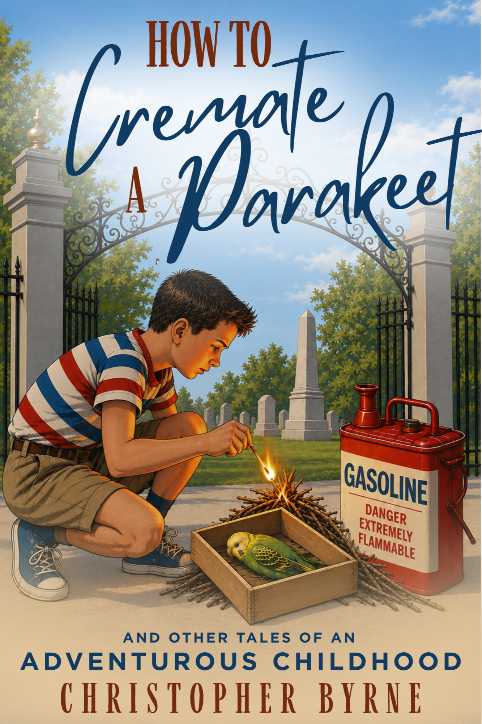
Chris Byrne Chats About His New Book "How To Cremate A Parakeet"
COMMENTARY AND OPINION EDITORIALS
The Toy Association & UIA’s Toy Hub Bring Toy & Game Inventors Together in LA
COMPANIES
“CARVE-X” MAKES LANDMARK MOVE TO THE JAVITS CENTER FOR TOY FAIR 2027
PITCHES: PRODUCT CONCEPTS FOR LICENSING & PRODUCTS FOR RETAIL
People of Play™ Announces Speaker Lineup for 2026 Global Inventor Pitch & Innovation Conference
See more
POP's Got Talent

POP Entertainment
Randy Klimpert Shares his Ukulele Collection
POP Entertainment
Steve Casino Peanut Art
POP Entertainment
Everyone's Talking about POP!
POP Entertainment
Princess Etch - a Multi-Talented Etch A Sketch Artist
POP Entertainment
Joseph Herscher of Joseph' s Machines.
See more
Recent POPcast
Hidden Role: The Brains Behind your Favorite Games
Brent Bushnell talks Two Bit Circus, VR, & STEAM (Part 1)
Hidden Role: The Brains Behind your Favorite Games
Tim Walsh Celebrates the 30th Anniversary of Blurt!
Hidden Role: The Brains Behind your Favorite Games
Connie Vogelmann designed Apiary & Wyrmspan!

Hidden Role: The Brains Behind your Favorite Games
Bob Fuhrer... Is THE Crocodile Dentist!

Hidden Role: The Brains Behind your Favorite Games
Tom Dusenberry... Bought Atari, Wizards of the Coast, and Avalon Hill!
See more
POPDuos

POPDuos: Interviews with Legends and Leaders
POPDuo: Richard Dickson, Mattel’s President & COO, and Kedar Narayan, Young Inventor Challenge AMB

POPDuos: Interviews with Legends and Leaders
POPDuo: Will Shortz and Josh Wardle

POPDuos: Legends and Leaders Explore Creativity
POP Duo: Elan Lee, Co-Founder, Exploding Kittens.and Jeff Probst, Host and Exec Producer, Survivor
POPDuos: Legends and Leaders Explore Creativity
POP Duo: David Fuhrer, MNG Director, Blue Sq Innovations & Shawn Green, past Dodgers & Mets MLB Star

POPDuos: Legends and Leaders Explore Creativity
POP Duo: Bob Fuhrer, Founder, Nextoy and Tom Fazio, Golf Course Designer
See more
Featured Articles
The Bloom Report
Toy Inventors--The Heart and Soul of the Industry
The Bloom Report
Brian Turtle: 'Endless' Stories, Advice, Kevin Bacon and More! tBR Person of the Week
Biographies and Interviews
Jonathan Levy on Jon2.0 - from Co-Founding Mastermind Toys to Spin Master
Biographies and Interviews
Andrew Perlmutter's Journey from Glencoe to Funko with Crazy Ideas that turned out Golden
See more