
Interview on “One! The Evolution of Civilization” by Jay Horowitz – January 2026
by Jay Horowitz | 18 Jan 2026
Biographies and Interviews


The Dr. Weiner Incites Podcast
Episode Title: One Civilization, Many Stories: Language, Power, and the Future of Humanity
Host: Ms. Flynn
Guest: Jay Horowitz, author of One! The Evolution of Civilization
INTRO
Ms. Flynn:
Welcome back to The Dr. Weiner Podcast, where we explore the ideas that shape how we live, lead, and understand one another. I’m Ms. Flynn, and today’s conversation is one I’ve been looking forward to for quite some time.
My guest is Jay Horowitz, author of the ambitious and thought-provoking book One! The Evolution of Civilization. In it, Jay examines how humanity evolved—not just biologically, but socially—through language, culture, medicine, politics, religion, currency, time, standards, customs, and ultimately, where all of this may be taking us.
Jay, welcome. It’s great to have you here.
THE INTERVIEW
Jay Horowitz:
Thank you, Margarite. It’s a pleasure to be here—and I appreciate the chance to talk about ideas that usually don’t fit neatly into sound bites.
ON THE ORIGIN OF THE BOOK
Ms. Flynn:
Let’s start at the beginning. One! isn’t a narrow book—it’s expansive, almost panoramic. What compelled you to attempt something so sweeping? What question were you trying to answer?
Jay Horowitz:
The simplest question, and maybe the hardest one: How did we get here?
Not just technologically, but psychologically and morally. I realized that we often study civilization in fragments—politics in one silo, religion in another, economics somewhere else. But humans didn’t evolve that way. These systems grew together, influenced one another, and sometimes collided.
One! is my attempt to tell a single, continuous story of civilization—not as disconnected chapters, but as one evolving organism.
LANGUAGE AS THE FIRST INFRASTRUCTURE
Ms. Flynn:
You argue that language may be humanity’s most powerful invention—more powerful than tools or weapons. Why?
Jay Horowitz:
Because language creates shared reality.
Tools extend our hands. Weapons extend our force. But language extends our minds. It allows memory to outlive the individual, ideas to travel across generations, and cooperation to scale beyond family or tribe.
Once we had language, we could create laws, myths, contracts, medicine, religion—all abstractions that only exist because we agree they exist. Civilization begins the moment we say, “This means something,” and others nod in agreement.
CULTURE AND CUSTOMS: INVISIBLE RULEBOOKS
Ms. Flynn:
You write that culture is often invisible to the people living inside it. Can you explain that?
Jay Horowitz:
Culture is the rulebook we stop noticing because we learned it before we could question it.
It tells us what’s polite, what’s sacred, what’s offensive, what’s normal. The fascinating thing is that most conflict—personal and global—comes not from malice, but from unexamined cultural assumptions colliding.
One of my goals in the book is to help readers step outside their own cultural autopilot and ask, “Why do I believe this is the ‘right’ way?”
MEDICINE: WHEN BELIEF MEETS SCIENCE
Ms. Flynn:
Your section on medicine is particularly striking. You describe it as a bridge between belief and biology.
Jay Horowitz:
Medicine is where civilization becomes deeply personal.
Early medicine was ritual, prayer, and superstition—yet it often worked because belief itself is powerful. Modern medicine gave us data, science, and precision, but sometimes lost the human element.
The evolution of medicine mirrors civilization itself: a constant tension between what we can measure and what we feel. The future, I believe, lies in integrating both—treating the whole person, not just the symptom.
POLITICS, POWER, AND THE ILLUSION OF ORDER
Ms. Flynn:
You’re critical—but fair—when you discuss politics. You suggest that political systems are stories we tell ourselves. That can be unsettling.
Jay Horowitz:
It should be unsettling.
Governments are not laws of nature; they are agreements. Borders are imaginary lines we defend with real consequences. Politics is humanity’s ongoing experiment in managing power without destroying itself.
When we forget that systems are human-made, we treat them as sacred and unchangeable. That’s when progress stalls—and conflict grows.
RELIGION: MEANING BEFORE ANSWERS
Ms. Flynn:
You handle religion with unusual balance—neither dismissive nor dogmatic. How do you see its role in civilization?
Jay Horowitz:
Religion emerged to answer questions science couldn’t yet touch: Why are we here? How should we live? What happens when we die?
At its best, religion provides meaning, moral structure, and community. At its worst, it becomes rigid, exclusionary, and weaponized.
I don’t see religion as obsolete. I see it as evolving—just like everything else. The challenge is keeping its wisdom while shedding its fear.
CURRENCY, TIME, AND STANDARDS: AGREEMENTS THAT RUN THE WORLD
Ms. Flynn:
You devote fascinating chapters to things we rarely question—money, time, standards. Why focus there?
Jay Horowitz:
Because civilization runs on agreements we pretend are facts.
Money is belief. Time zones are belief. Measurements are belief. None of them exist in nature—but we’ve built entire global systems on them.
Once you realize that civilization is a network of shared agreements, you also realize it can be redesigned. That’s both terrifying and hopeful.
THE FUTURE: FRAGMENTATION OR UNITY
Ms. Flynn:
Looking ahead, are you optimistic or concerned about where civilization is going?
Jay Horowitz:
Both.
We are more connected than ever, yet increasingly fragmented. Technology has outpaced wisdom. We can communicate instantly, but struggle to understand one another.
The future depends on whether we remember that beneath our labels—nationality, ideology, religion—we are participating in the same human experiment.
That’s why the book is called One! We are one species, one story, one fragile civilization.
SUMMING UP HIS BELIEFS
Ms. Flynn:
Jay, I want to end with this. If you had to sum up your core beliefs—the heartbeat of One! —what would you say?
Jay Horowitz:
I believe that civilization is not finished; it’s unfinished. We are in the process of becoming One!
I believe humans are capable of extraordinary cooperation when fear doesn’t get in the way. I believe our systems should serve human dignity, not the other way around.
And most of all, I believe that understanding our shared history is the key to shaping a future that’s less about domination and more about connection.
We don’t need to become the same, but we do need to remember that we belong to the same story.
CLOSING
- Flynn:
That’s a powerful place to end.
Jay Horowitz, thank you for joining us—and for giving us a book that challenges us to think bigger, deeper, and more humanly.
To our listeners, One! The Evolution of Civilization is more than a book—it’s an invitation to step back and see the whole picture.
Until next time, this is M. Flynn on The Dr. Weiner Insights Podcast.

Recent Blogs




Recent Blogs
The Bloom Report
From Jabba’s Sail Barge to Mos Eisley: How HasLab Made the Impossible Possible

The Bloom Report
Steve Rad on TikTok Shop, Social Commerce and the Next Big Opportunity for the Toy Industry at the Chicago Toy and Game Fair!

General
Toys R Us is Back

The Bloom Report
David Becker and Dr. Amanda Gummer Talk Building Trust, Creating Demand and Helping Children's Brands Grow

Press Release
Plus-Plus USA Returns to the Chicago Toy & Game Fair, Bringing Hands - On Creative Play to Holiday Shoppers
See more
Recent Wiki
BOOK REVIEWS
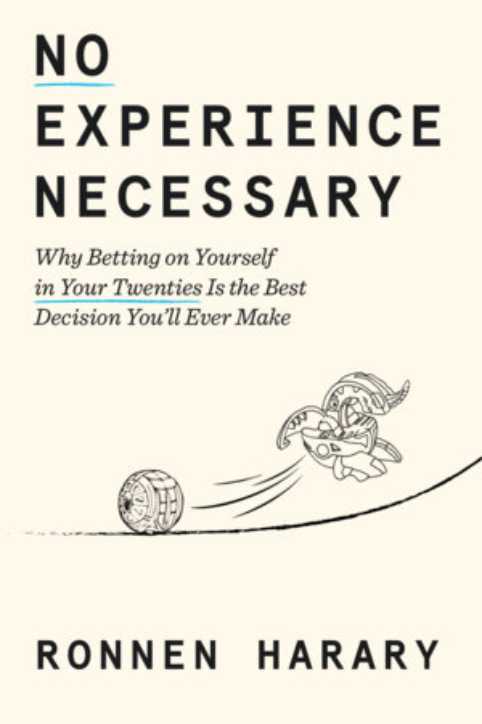
Book Review: No Experience Necessary: Why Betting on Yourself in Your Twenties Is the Best Decision You’ll Ever Make by Ronnen Harary
PEOPLE
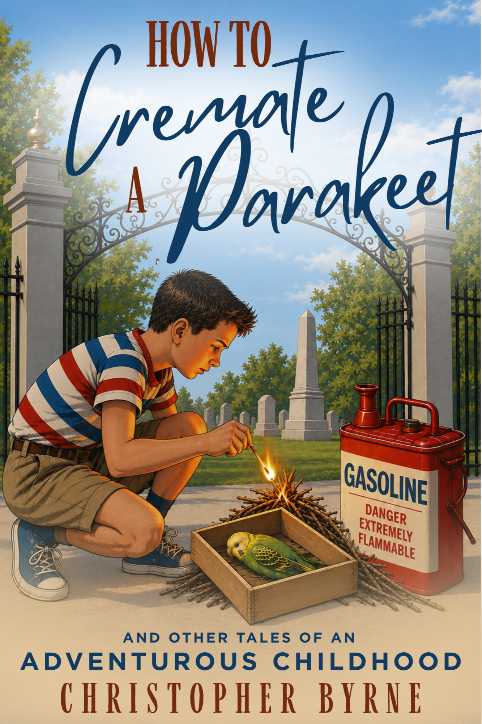
Chris Byrne Chats About His New Book "How To Cremate A Parakeet"
COMMENTARY AND OPINION EDITORIALS
The Toy Association & UIA’s Toy Hub Bring Toy & Game Inventors Together in LA

COMPANIES
“CARVE-X” MAKES LANDMARK MOVE TO THE JAVITS CENTER FOR TOY FAIR 2027
PITCHES: PRODUCT CONCEPTS FOR LICENSING & PRODUCTS FOR RETAIL
People of Play™ Announces Speaker Lineup for 2026 Global Inventor Pitch & Innovation Conference
See more
POP's Got Talent

POP Entertainment
Randy Klimpert Shares his Ukulele Collection
POP Entertainment
Steve Casino Peanut Art

POP Entertainment
Everyone's Talking about POP!

POP Entertainment
Princess Etch - a Multi-Talented Etch A Sketch Artist

POP Entertainment
Joseph Herscher of Joseph' s Machines.
See more
Recent POPcast
Hidden Role: The Brains Behind your Favorite Games
Brent Bushnell talks Two Bit Circus, VR, & STEAM (Part 1)

Hidden Role: The Brains Behind your Favorite Games
Tim Walsh Celebrates the 30th Anniversary of Blurt!
Hidden Role: The Brains Behind your Favorite Games
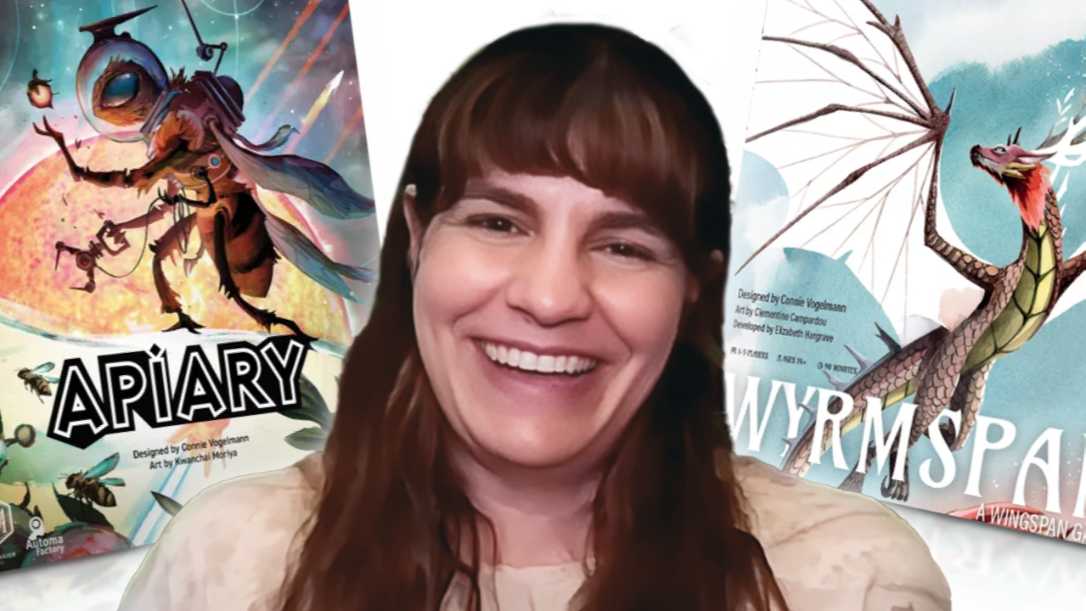
Connie Vogelmann designed Apiary & Wyrmspan!

Hidden Role: The Brains Behind your Favorite Games
Bob Fuhrer... Is THE Crocodile Dentist!

Hidden Role: The Brains Behind your Favorite Games
Tom Dusenberry... Bought Atari, Wizards of the Coast, and Avalon Hill!
See more
POPDuos

POPDuos: Interviews with Legends and Leaders
POPDuo: Richard Dickson, Mattel’s President & COO, and Kedar Narayan, Young Inventor Challenge AMB

POPDuos: Interviews with Legends and Leaders
POPDuo: Will Shortz and Josh Wardle

POPDuos: Legends and Leaders Explore Creativity
POP Duo: Elan Lee, Co-Founder, Exploding Kittens.and Jeff Probst, Host and Exec Producer, Survivor

POPDuos: Legends and Leaders Explore Creativity
POP Duo: David Fuhrer, MNG Director, Blue Sq Innovations & Shawn Green, past Dodgers & Mets MLB Star

POPDuos: Legends and Leaders Explore Creativity
POP Duo: Bob Fuhrer, Founder, Nextoy and Tom Fazio, Golf Course Designer
See more
Featured Articles

The Bloom Report
Toy Inventors--The Heart and Soul of the Industry
The Bloom Report
Brian Turtle: 'Endless' Stories, Advice, Kevin Bacon and More! tBR Person of the Week
Biographies and Interviews
Jonathan Levy on Jon2.0 - from Co-Founding Mastermind Toys to Spin Master
Biographies and Interviews
Andrew Perlmutter's Journey from Glencoe to Funko with Crazy Ideas that turned out Golden
See more