
Directional Paper by Christian Braun, CEO hobbyDB | July 2, 2026
AI changes everything and, as I have been working for the last 25 years in the 500 billion FanMerch and collectibles market, it’s literally my business to have an informed opinion on how the market will be affected by it. I see 5 use cases for AI for fans and collectors:
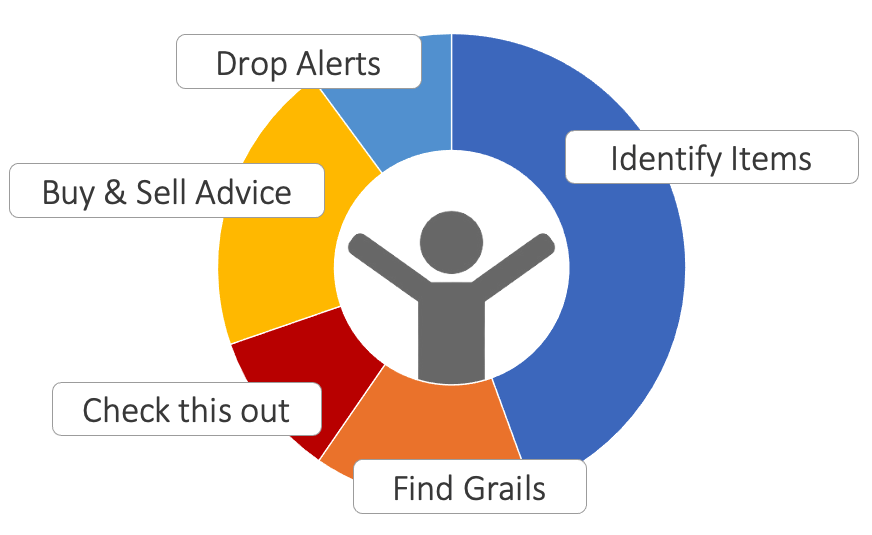
- Identify items
- Find Grails and other items
- Drop Alerts (for example, if they follow Lego and want to know when new exclusives come to market anywhere around the world)
- Buy and Sell Advice
- ‘Check this out”, similar to Amazon’s invention of “people that buy this also like that” recommendations
Each of these use cases already have simple, individualized solutions, but AI does it better, sometimes 100x faster.
At hobbyDB we’re working on incorporating all of these into what we do.
1. Identify items
There are three types of AI item-identification services available;
Generic Apps. There are many new apps which claim they can recognize items, some of which also offer valuation. We actively monitor for new apps and whenever one comes out, we test it.
So far we’ve tried out:
- Antique Identifier & Appraisal
- Antique Identifier by Picture
- Antiqo
- Collectibles AI (an older but still valid review here)
- Collectibles.com
- Collectibles Item Scanner
- Kept
- Underpriced AI
- Toyzie (review here)
- WhatsitAI
Our findings are that all of these only work in very limited instances and are no better than Google Lens. Their worst aspect is that they very often give wildly inaccurate results as they all show their respective algo’s “best” result and have no option to give a “no results” display - without explaining these limitations to users.
Specific Item Catalog Apps. These apps provide similar functionality to the first ones, but offer identification and/or valuation for a specific type of item, e.g. coins or trading cards. Generally, they work well as they usually utilize their own type-specific collectible databases. We anticipate there will be more of these appearing on the market.
This is, of course, also the model we use at hobbyDB, i.e. we compare your photos against all items in our database so that you either find your item or know that the database does not have your item. As the algorithm is trained, it may initially rank correct items lower than they should be, but with constant training, we expect this to be rectified rapidly.
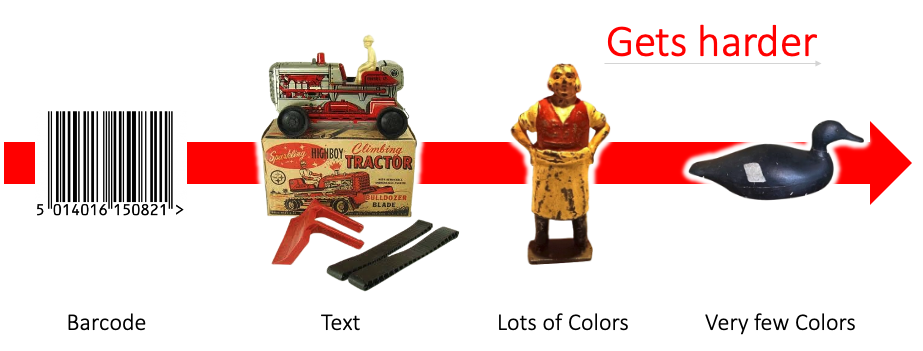
Collectible-Data-as-a-Service. The final trend we’re seeing are services like Vardera or Ximilar, which offer structured data or algorithms to identify collectibles. This currently works for the same type of data as Specific Item Type Apps, i.e. for two-dimensional objects like coins and trading cards that they can get their hands on.
Overall Problem. Currently, the biggest issue for this approach is that while many sites have lots of collectible data like eBay or Worthpoint, very few have structured data. At present, this only really exists for easily-catalogable verticals like coins, Lego, Sneakers, Stamps and Trading Cards. That makes training an algorithm accurately for anything outside of these categories extremely hard to do accurately. Both Collectible-Data-as-a-Service companies (and probably others that are either in stealth mode or coming) are trying to license or buy more data from other sources. eBay Ventures is part of a consortium that has invested in Vardera.
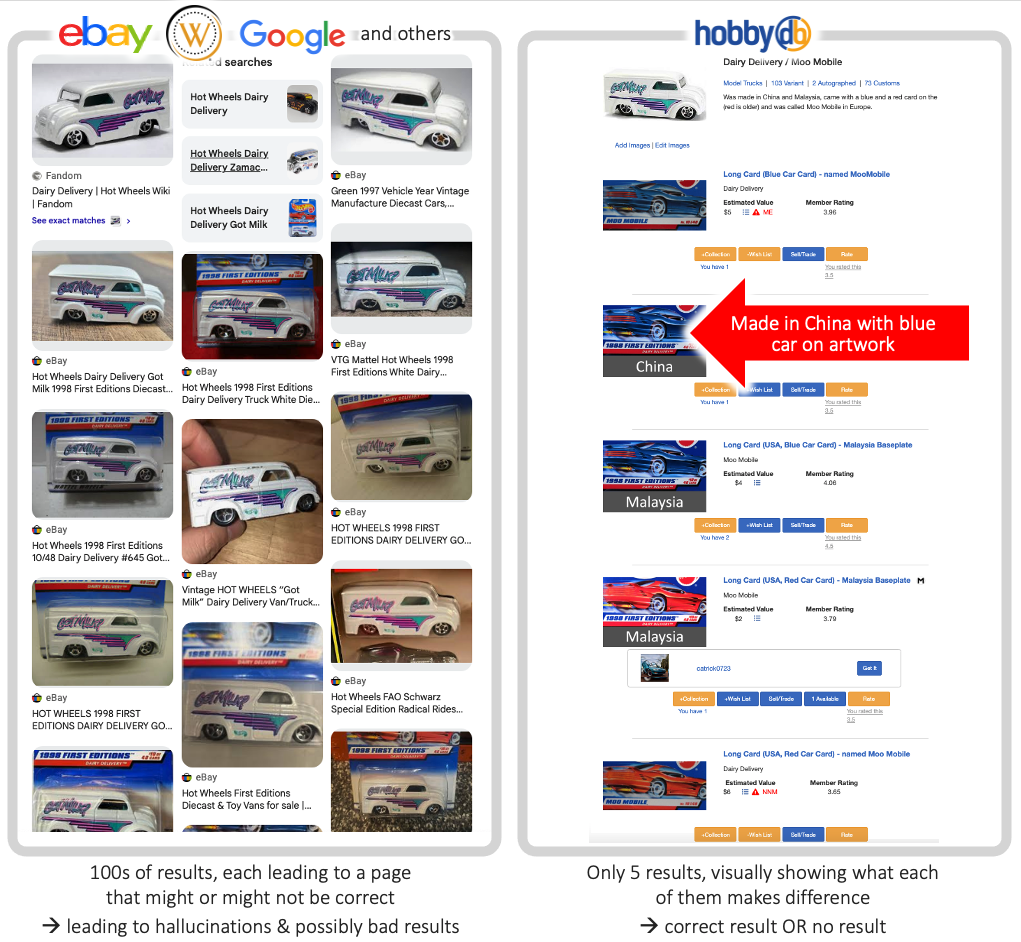
hobbyDB’s Approach. We already have a barcode scanner and just released an image matching feature in beta. We only use data from our own structured database and show very similar results such as variants and subvariants (small differences that can make huge differences in value and are explained so that novices can understand these variations and make the right decision). We will continue on refining the matching algorithm and add more data.
2. Find Grails
Marketplaces and auction houses have always offered item alerts as a service, but only for items sold through their own channels. In addition, there are services like Invaluable, LOT-art or The Saleroom which serve as aggregators for items sold through hundreds of auctioneers and offer alerts for all of them. Also, there are Specific Item Type services, whereby specialists like AuctionSearcher (Art) and WatchBid (Wristwatches) will let you know when items you’re seeking that are of their specific type come up for sale.
It is early days for equivalent AI services, but we are now seeing the emergence of both general services like Grailsnap and type-specific services like Luxfi.ai for watches.
The problem for all of these is that it is impossible to describe with 100% accuracy what you want to find for any service that is not database powered.
For example if I want a copy of the book Modellauto Katalog Siku 1st Edition by Matthias Braun, I can easily tell Alibris to let me know when it is listed. If I want a Lego Slope component, Inverted 33 3 x 2 with Flat Bottom Pin, without Connections between Studs, Item Number 3747a in dark turquoise I can have Bricklink look out for me for that.
But this won’t work in any case where the data isn’t structured and the above info is fed to an AI as descriptive text. That’s not the case for new items with UPCs or reference numbers, of course, but these can already be found easily on any number of sites like eBay, Mercari, StockX etc, and a large proportion of users do not need or want to use services like this for new items like these. Most want to use them to find unusual, rare vintage items or even spare parts which have no identifying codes.
If users do have to rely on descriptions, they need to make them explicit, not too extensive or exclusive and have to hope that sellers have described the items in the same language they are using.
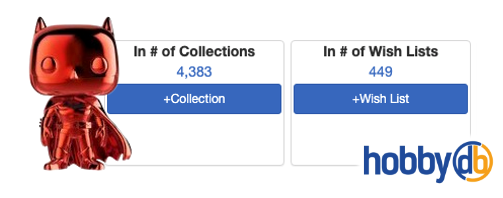
hobbyDB’s Approach. Our members already have 10.5 million well defined items on their Wish Lists and we can use our own passive inventory (the 58 million items our members own) and agents that can use our image matching solution to find these Wish List items on other sites.
3. Drop Alerts
These services find new item drops in time for a user to be able to buy one before they sell out. This could be for anything from a new Funko POP exclusive sold only at BAIT to a collab between a particular magazine and Lego, which has an exclusive Lego product coming with a particular issue. In all these cases and more, collectors want to know as early as possible that the drop is happening.
All services in this area are specialized. Some, like Lootping, MerchVault and RegExr cover multiple types of collectibles. Others, such as TCG Restock, cover only one type of collectible.
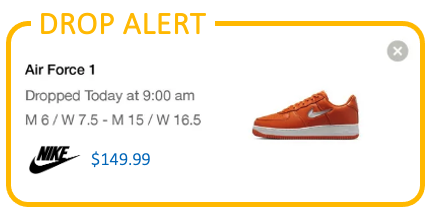
The problem that is hard to overcome is that this is all about hard-coding. For the Funko example, the tool would have to check Chalice Collectibles, Game Stop and maybe 50 other websites constantly to see if an announcement is made about a new Funko exclusive (but not other Funko products that they start offering for sale). For the Lego product as a give-away in a magazine, it would have to check every possible Lego promotion partner, an impossible task. As AI matures, this might become more feasible over time. hobbyDB’s Approach. We know what our members collect, which brands they follow and what kind of drops they have bought in the past and can use bots similar to what we plan for grails-finding. Our new Shopify App will also help as it imports new drops instantly into hobbyDB (we have plans for other popular ecommerce apps, like WooCommerce and BigCommerce.
4. Buying or Selling Advice
This is a newly emergent category. So far, we are only aware of Apprayz, a new app, currently on iOS, which claims to be able to tell you when to sell or hold your item but at the moment fails miserably at this (review here).
Value. To do this successfully, an app needs access to structured data, lots of transactions and a good algorithm. For example, it would need to be able to see how Hot Wheels Red Line Club models of American muscle cars or JDMs or other categories performed over the last few years over time so that it could say “Buy this Custom Barracuda at $30 for an expected resale value of $70 in the first 10 days, then expect a drop value with a rebound after 180 days to around $100”. For now only StockX and possibly some of the trading card and Lego websites can do that with any acceptable reliability.
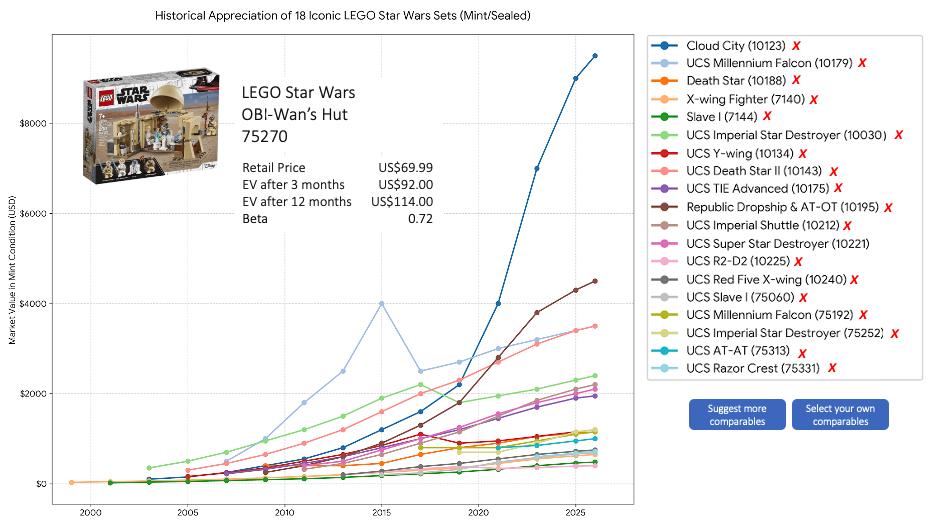
It’s also important to note that the emergence of such an app would reduce these swings and make it harder to earn money this way (currently only dealers with long memories and an analytical mind do this, but the app would allow everybody to dabble in this kind of day-trading).
Liquidity. How many items exist, how many have been recently sold, how many are on hobbyDB”s Wish List, how widely or narrowly distributed are Price Points? This helps to know if an item can be sold quickly when a collector wants to or has to.
Trust. What do I know about the specific item, is it genuine? What do I know about this seller (and sometimes also buyer as there is also buyer fraud like item swaps or part theft).
hobbyDB’s Approach. Using actual transactions from 128 ecommerce marketplace and auction houses, collection management statistics, wish list movements, ratings, vouches, detailed crowd-source fake information and rich and connected information about hobbyDB’s members help to correctly identify value and liquidity and establish if a counterparty can be trusted. We will be using AI to make our volunteers more efficient (for example we are testing currently using a bot to assign transactions where the UPC and keywords are a match and the price achieved is within narrow bands of hobbyDB’s current Estimated Value. We will test and expand on this.
5. Check this out
Many collectors like to constantly broaden their horizons and love to be shown brands or items they might be interested in. In our opinion, this is something AI will be extremely good at - if it has access to the right data. hobbyDB’s 820,000 members own 58 million items in their hobbyDB-managed collections. We have access to 900,000 ratings and database items have up to 54 attributes.
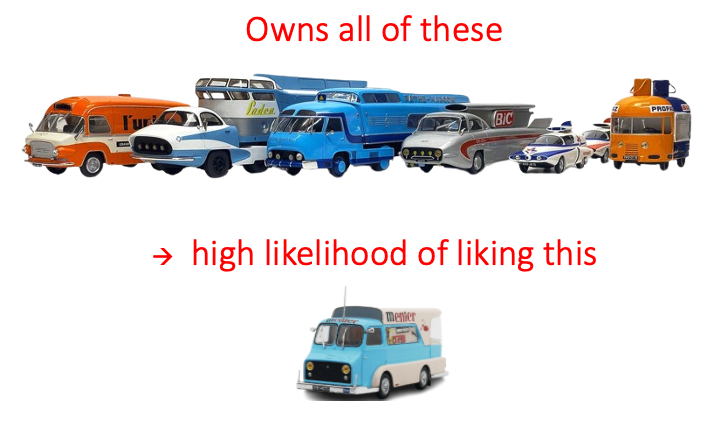
Somebody who owns 46 Aquaman figures from 12 brands in different scales will most likely want to see and potentially buy one produced by a new brand in 1:24 Scale. However, if all their other figures are in 1:6 Scale, then they probably wouldn’t go for the new 1:24 one.
Similarly, for someone who owns 27 Elvis Presley Hard Rock Cafe pins and some Elvis LPs, Elvis items are probably of interest. But if these are the only Elvis items they have - and they also own 2,000 other Hard Rock Cafe pins related to other subjects, then items exclusively related to Elvis aren’t likely to appeal - but any type of Hard Rock Cafe pin might. Best of all, this matching can be constantly tested and improved as more data is gleaned.
hobbyDB’s Approach. We have already started doing this. For example, we told members who had Garbage Pail Kids items in their collections, that artist Joe Simko is now working on a new brand, the Craniacs. We had a much higher click-through rate for collectors with 7 or more of those items and are now productizing that (create a “look-a-like-audience” and then email them starting with members that have say 20 qualifying items, then go to 19, 18 etc until the click-through rate declines and use an agent that will get trained with this data.
Conclusions?
This is bound to happen and sooner than we think. There is already lots of activity and we very much predict more will keep coming and soon. Our money is on;
- Good point solutions like the ones for trading cards, which already do an excellent job, probably in comics, Lego, sneakers, trading cards and some easier-to-catalog brands such as Funko and Hot Wheels. These might do all of the five use cases (obviously only within their niche).
- As an overall service for any collectible type, I think only hobbyDB (I am biased) will be able to provide all of these services best-of-breed.
- The Collectible-Data- as-a-Service might be able to do some of this for a number of niches but not all (as they are dependent on doing data licensing deals and there are very few data sources available).
Recent Blogs


Recent Blogs
General
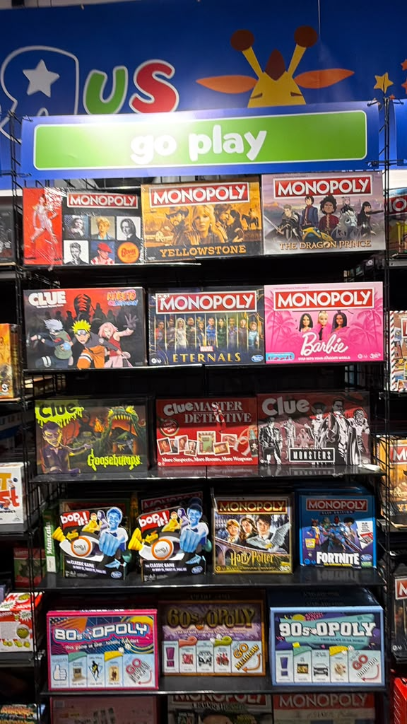
Toys R Us is Back

The Bloom Report
David Becker and Dr. Amanda Gummer Talk Building Trust, Creating Demand and Helping Children's Brands Grow

Press Release
Plus-Plus USA Returns to the Chicago Toy & Game Fair, Bringing Hands - On Creative Play to Holiday Shoppers

Biographies and Interviews
The Force of Creativity: 6 Questions with Ashley Eckstein

The Bloom Report
Daryl Andrews Talks Best in Play, Working with Inventors and More!
See more
Recent Wiki
BOOK REVIEWS
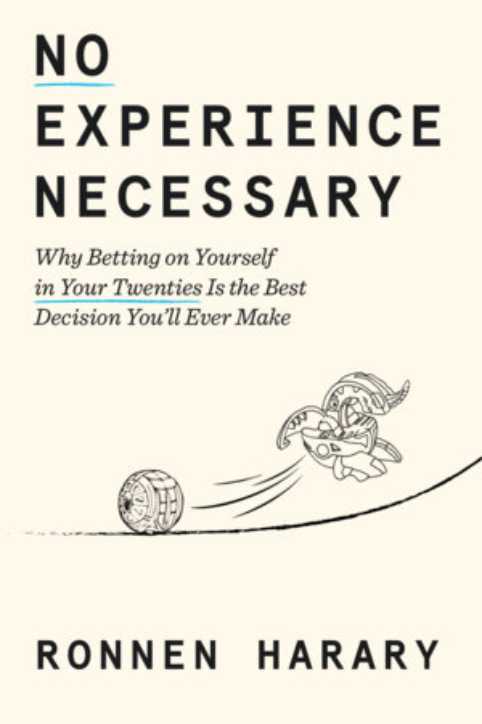
Book Review: No Experience Necessary: Why Betting on Yourself in Your Twenties Is the Best Decision You’ll Ever Make by Ronnen Harary
PEOPLE
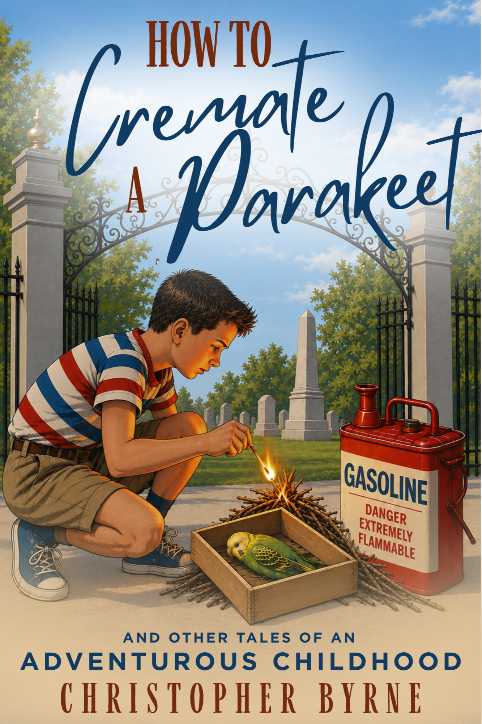
Chris Byrne Chats About His New Book "How To Cremate A Parakeet"
COMMENTARY AND OPINION EDITORIALS
The Toy Association & UIA’s Toy Hub Bring Toy & Game Inventors Together in LA
COMPANIES
“CARVE-X” MAKES LANDMARK MOVE TO THE JAVITS CENTER FOR TOY FAIR 2027
PITCHES: PRODUCT CONCEPTS FOR LICENSING & PRODUCTS FOR RETAIL
People of Play™ Announces Speaker Lineup for 2026 Global Inventor Pitch & Innovation Conference
See more
POP's Got Talent

POP Entertainment
Randy Klimpert Shares his Ukulele Collection
POP Entertainment
Steve Casino Peanut Art
POP Entertainment
Everyone's Talking about POP!

POP Entertainment
Princess Etch - a Multi-Talented Etch A Sketch Artist
POP Entertainment
Joseph Herscher of Joseph' s Machines.
See more
Recent POPcast

Hidden Role: The Brains Behind your Favorite Games
Brent Bushnell talks Two Bit Circus, VR, & STEAM (Part 1)

Hidden Role: The Brains Behind your Favorite Games
Tim Walsh Celebrates the 30th Anniversary of Blurt!
Hidden Role: The Brains Behind your Favorite Games
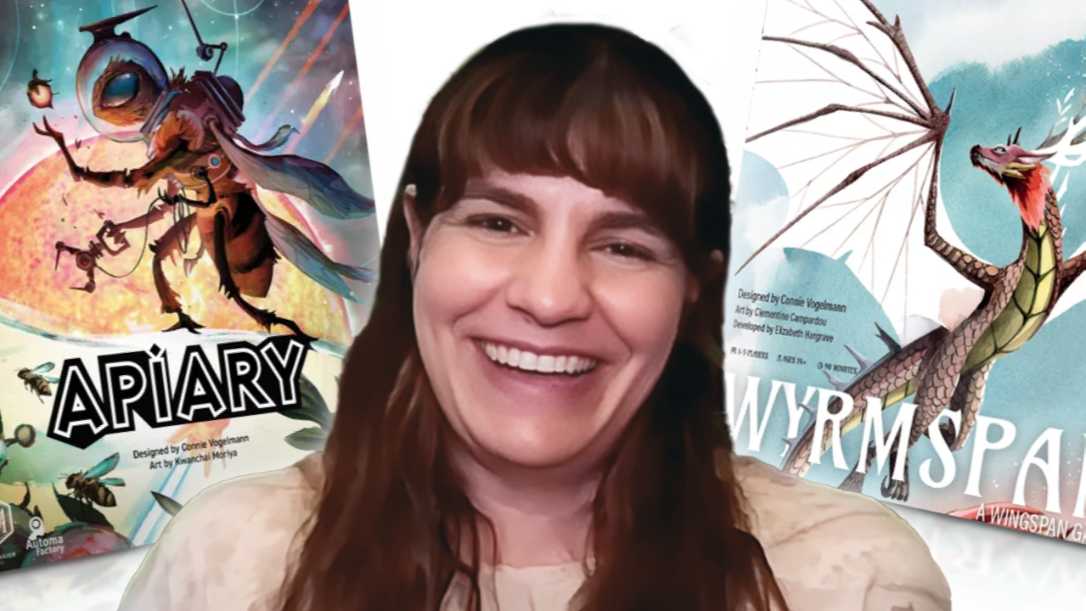
Connie Vogelmann designed Apiary & Wyrmspan!

Hidden Role: The Brains Behind your Favorite Games
Bob Fuhrer... Is THE Crocodile Dentist!

Hidden Role: The Brains Behind your Favorite Games
Tom Dusenberry... Bought Atari, Wizards of the Coast, and Avalon Hill!
See more
POPDuos

POPDuos: Interviews with Legends and Leaders
POPDuo: Richard Dickson, Mattel’s President & COO, and Kedar Narayan, Young Inventor Challenge AMB

POPDuos: Interviews with Legends and Leaders
POPDuo: Will Shortz and Josh Wardle

POPDuos: Legends and Leaders Explore Creativity
POP Duo: Elan Lee, Co-Founder, Exploding Kittens.and Jeff Probst, Host and Exec Producer, Survivor

POPDuos: Legends and Leaders Explore Creativity
POP Duo: David Fuhrer, MNG Director, Blue Sq Innovations & Shawn Green, past Dodgers & Mets MLB Star

POPDuos: Legends and Leaders Explore Creativity
POP Duo: Bob Fuhrer, Founder, Nextoy and Tom Fazio, Golf Course Designer
See more
Featured Articles
The Bloom Report
Toy Inventors--The Heart and Soul of the Industry
The Bloom Report
Brian Turtle: 'Endless' Stories, Advice, Kevin Bacon and More! tBR Person of the Week

Biographies and Interviews
Jonathan Levy on Jon2.0 - from Co-Founding Mastermind Toys to Spin Master
Biographies and Interviews
Andrew Perlmutter's Journey from Glencoe to Funko with Crazy Ideas that turned out Golden
See more