It’s always toward the table.
Editor's Note:
The following article is adapted from the keynote address delivered by Julien Sharp, General Manager, asmodee North America, at the Association of Games & Puzzles International (AGPI) Annual Convention in Minneapolis on July 11, 2026. It has been adapted from remarks as delivered for print publication.
I run asmodee's U.S. operations, which means I sit at the intersection of publishers, retailers, and the people who actually play games. After nearly two decades in the toy and game industry, I've had the opportunity to watch tabletop gaming evolve from a niche hobby into mainstream culture—which means I've seen enough cycles to have opinions, and enough humility to know I've been wrong before.
Rather than looking backward at the industry's recent success, I'd like to look forward. Here are four predictions I believe will shape the next decade of tabletop gaming. If you disagree, good—that's the point. The best outcome is that this leaves you with something to debate.
Growth Will Come from Broadening Participation
Three games illustrate why I believe this.
CATAN
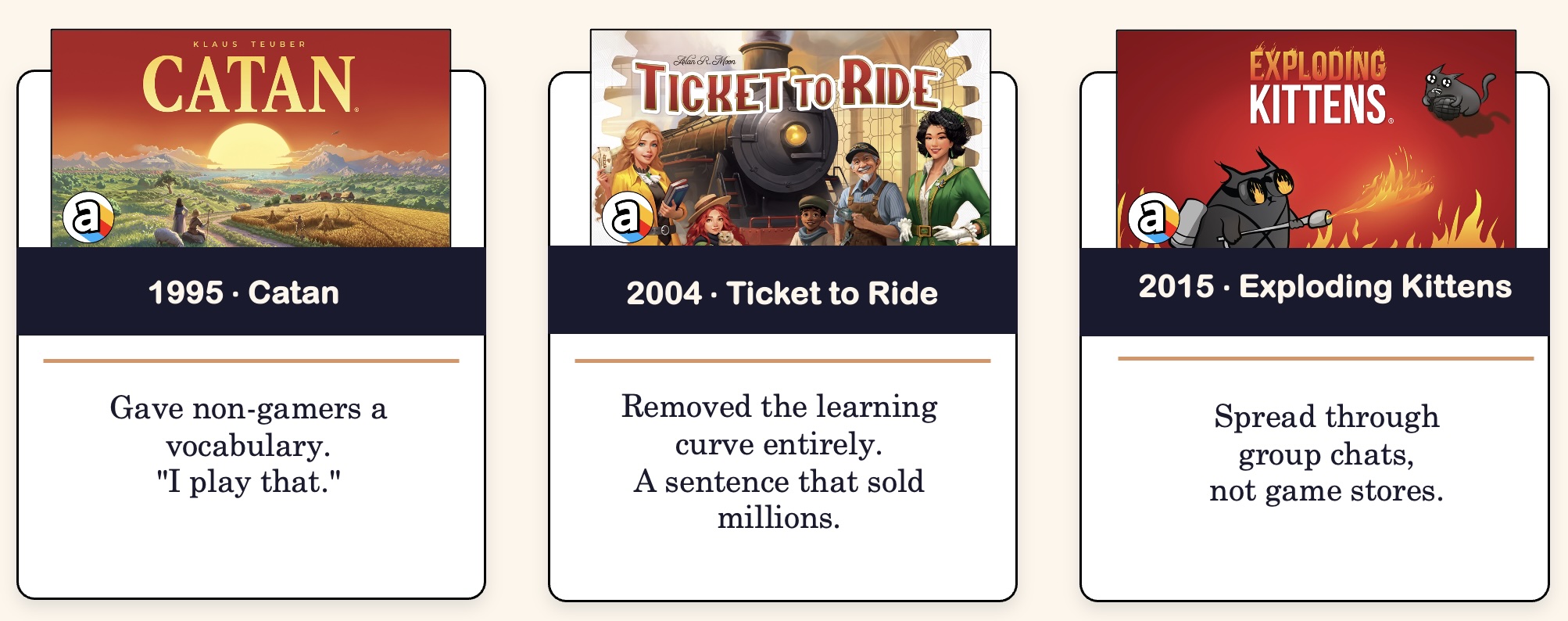
In 1995, CATAN arrives in Germany. Within a decade, it's in American living rooms. Not game stores—living rooms. The brilliance of CATAN was permission. It gave non-gamers a word for themselves: I play that.
CATAN gave people a vocabulary. It gave them permission to be a game person.
And here's the thing—that story isn't finished. It's still happening, right now, in places you wouldn't expect.
In September 2024, ESPN ran a full feature article. Not a passing mention—a real feature, with a headline: "How Settlers of CATAN has brought the Buffalo Bills closer." Quotes from half the roster.
Josh Allen—the quarterback, the franchise, the face of the team—opened a press conference during training camp, and the first thing he wanted to talk about wasn't football. It was that he'd just won the inaugural CATAN game of camp against three of his teammates. He called himself, and I'm quoting directly, "the Lord of CATAN."
This wasn't one guy with a hobby. It was a full table. Tight ends, offensive linemen, the quarterback—trading bricks and sheep, accusing each other of collusion, running an actual elimination tournament at the end of camp. One offensive lineman told ESPN the final round was, and again this is a direct quote from a professional athlete, "some bulls—t, government conspiracy."
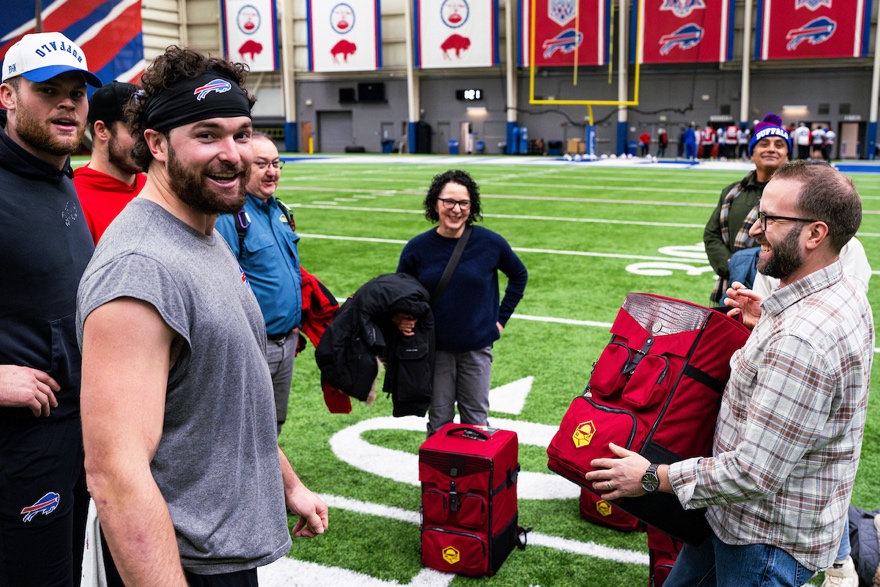
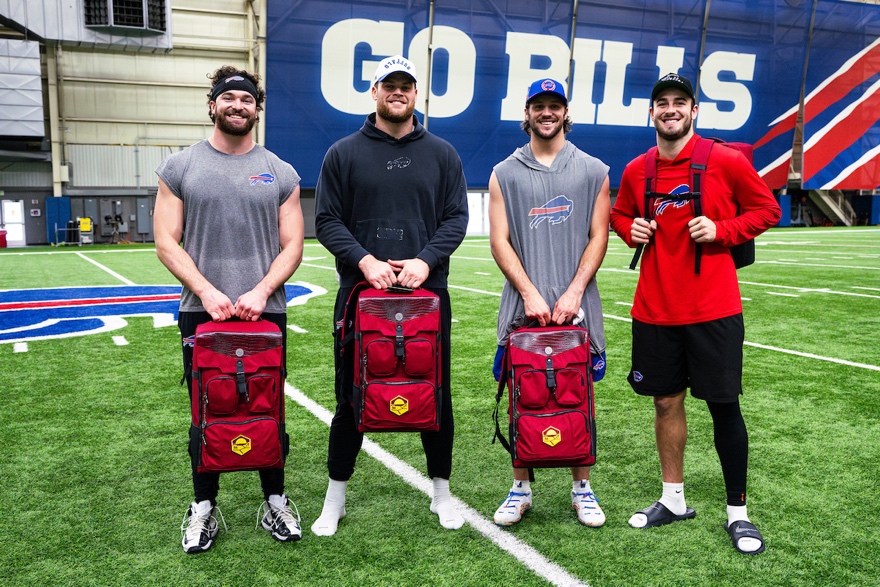
We read that article and called the Bills' PR team. We got an invite out to their practice facility. We walked onto an NFL practice field and handed out CATAN gift bags to the players.
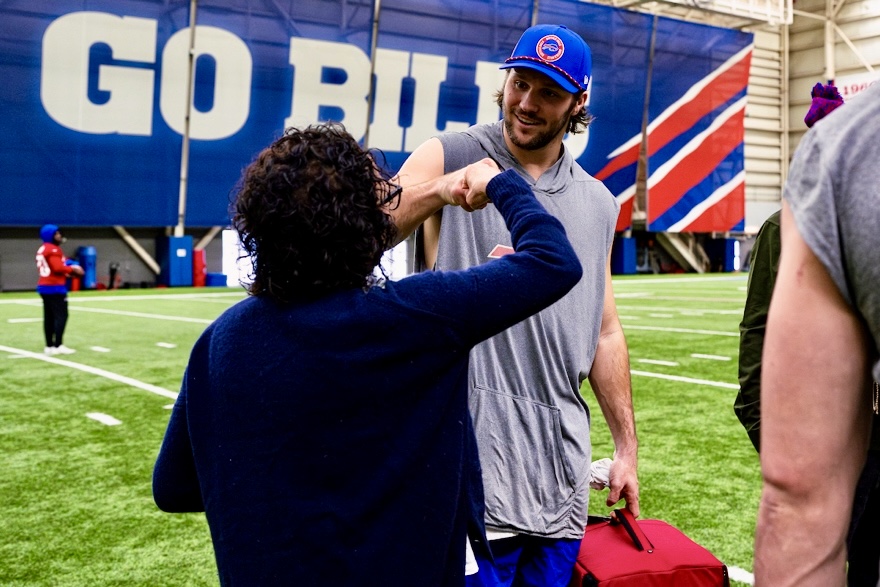
I fist-bumped Josh Allen. The reigning MVP of the league, on his own practice field, genuinely happy to see us because of a board game from 1995.
That visit turned into two years of sports and cultural partnerships that have, from the inside, meaningfully built the brand. CATAN isn't just a gateway game from three decades ago. It's actively finding new mainstream cultural footholds right now—in NFL locker rooms, of all places.
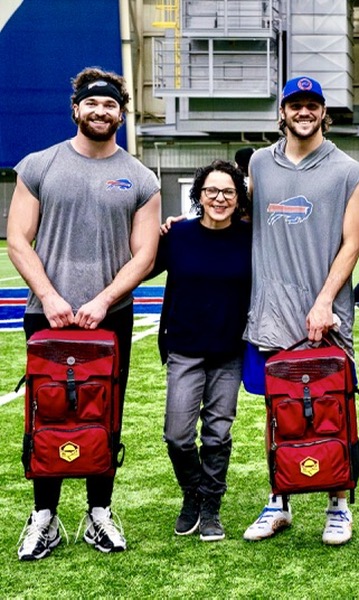
That's the proof of the prediction. Mainstream growth comes from showing up in places nobody expected—and earning it.
Ticket to Ride
I may be slightly biased here, having spent years with this title—but Ticket to Ride did something CATAN didn't fully accomplish: it removed the learning curve almost entirely. You connect trains. That's it. A seven-year-old and a sixty-five-year-old can sit down together without anyone reading instructions for forty-five minutes.
It became the phrase people used to introduce someone to the hobby. "We should play Ticket to Ride." That sentence drove years of category growth.
Exploding Kittens
Exploding Kittens shouldn't have worked. It was absurd. It was crowdfunded. It had no legacy IP, no major publisher, no retail muscle behind the launch. It became one of the best-selling card games in history.
Why? Because it was hilarious. It spread through social networks—not BoardGameGeek, not game stores. Group chats. It was shareable before we called things shareable.
Here's the number that still gets me: 219,382 people backed that Kickstarter campaign. To this day, across every category on the entire platform—not just games—Exploding Kittens remains the single most-backed Kickstarter project of all time. Other projects have raised more total money. Frosthaven raised over twelve million dollars. But nothing has ever come close to that many individual people deciding, I want in on this.
Each of these games did the same thing: they found people who were not already gamers and gave them a reason to start.
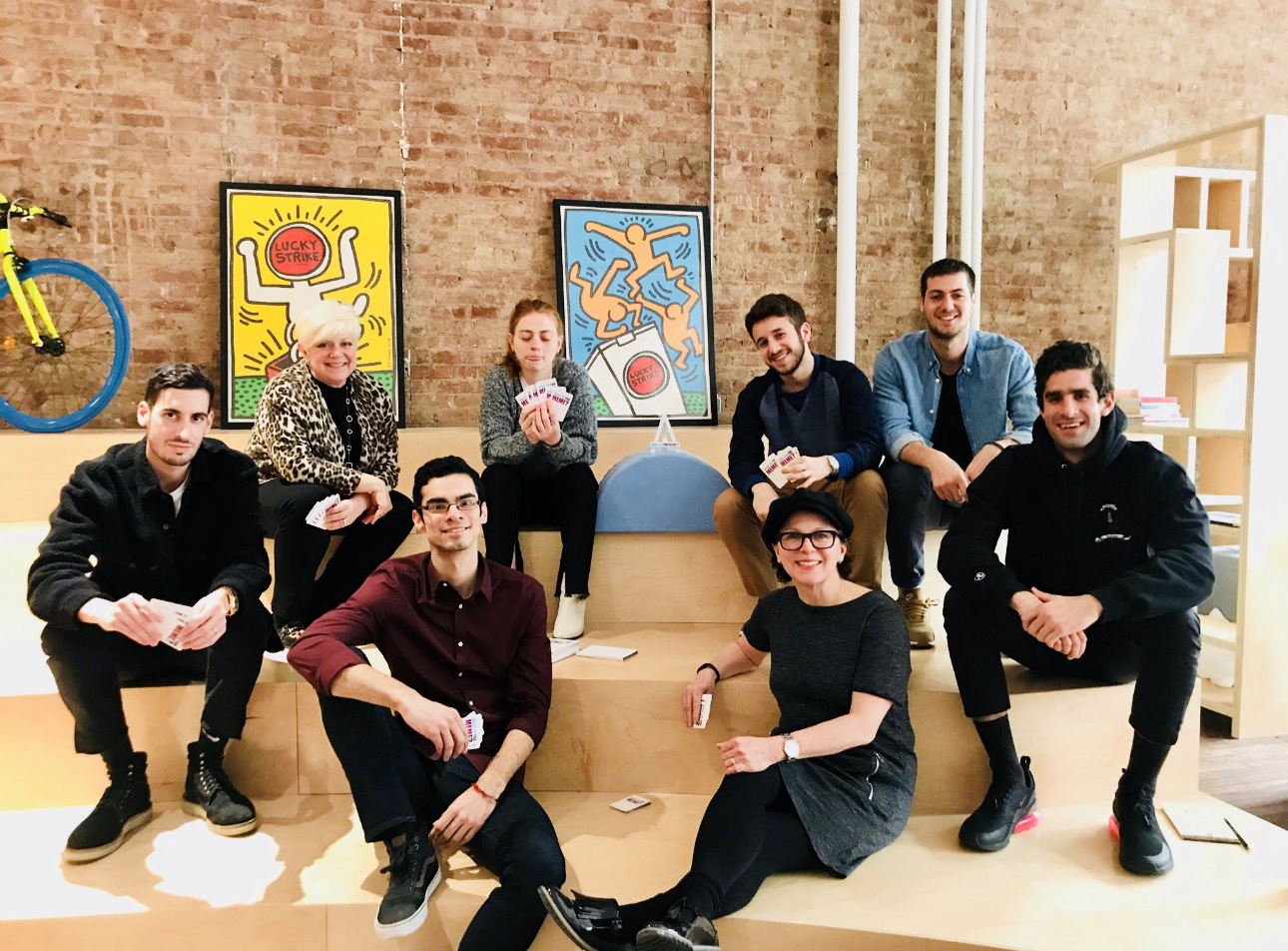
The hobby audience—the people who will drive forty-five minutes to a game store on release day—they're not going anywhere. They're the engine. But the growth of this industry has always come from the edges. From the family at Thanksgiving who discovers Ticket to Ride. From the bachelorette party playing What Do You Meme?.
My prediction: the publishers, retailers, and brands that win the next decade will be the ones who obsess over that person. The newcomer. The casual player. The "I don't really play games but this looks fun" person.
Not at the expense of hobby depth. In addition to it.
It's worth asking yourself: can you name the specific game that got you into the hobby—the one that started it all? Now ask a second question: have you introduced someone else to gaming using a completely different, simpler game? That gap—between what brought you in and what you use to bring others in—is the insight.
Ecosystems Will Matter More Than Publishers
It may sound odd coming from someone who works for a publisher, but I no longer believe the publisher is the most important driver of a game's success.
That might have been true twenty years ago—it might have been true ten years ago. It's not true now.
Here's what actually drives a game to breakout status today.
Discovery
A game exists. Nobody knows about it. Then a content creator—a YouTube channel, a TikTok account, a Twitch streamer—picks it up. Suddenly it has 800,000 views. Suddenly it's sold out. The publisher didn't do that. The ecosystem did.
But here's a story that goes even further than that.
Early in my career, I was employee number four at a little company called What Do You Meme?—the company's called Relatable now. Three founders. A card game. And an Instagram account.
One of those founders had built @FJerry—the name is a play on a common curse word—into one of the biggest meme accounts on the internet. Millions of followers. A genuine community of people who shared the same sense of humor, the same references, the same way of seeing the world.
They already had the audience. They built the game for the community that existed.
What Do You Meme? sold millions of copies. Not because of retail muscle or a big publisher. Because the ecosystem came first. The game came second.
That's the model. That's what I mean when I say the winners will be ecosystems.
Retail
Specialty retailers who have spent decades in this industry are master curators, hand-picking every game on their shelves. That recommendation infrastructure is irreplaceable. No algorithm has replicated it. When retail is strong, games find their audience.
Community
Organized play. Conventions. Game nights. The "board game café" phenomenon. This is where people develop identity as gamers. Once someone says "I'm a game person," they're a customer for life. Community creates that.
Events
Think about what industry conventions and trade shows do—what Gen Con does, what dedicated games conventions do around the world. Events compress the relationship between a game and a player. You try something, you love it, you buy it before you leave the building. Events are sales infrastructure disguised as fun.
Digital Discovery
BoardGameGeek. Reddit. YouTube algorithms. Board Game Arena—which, full disclosure, is part of the asmodee family—where millions of people discover games by playing them online before they ever buy a physical copy. The question "what should I play next" is now answered online before it's answered in a store. Publishers who understand this—who build communities around their IP online—have an enormous advantage.
Platforms create ecosystems. And the brands I watch most closely aren't the ones with the biggest catalogs. They're the ones building the biggest communities.
At asmodee, we have an entire division dedicated to what we call Lifestyle gaming—our TCGs, miniature games, RPGs, accessories. And our head of that division said something that has stuck with me. He said: the difference between a casual player and a lifestyle gamer is two words. A casual player says "I play TCGs." A lifestyle gamer says "I am a TCG player."
That shift—from I play to I am—that's identity. And once a product becomes part of someone's identity, you become part of how they see themselves.
Magic: The Gathering sells a lifestyle, an identity, a calendar of events. Dungeons & Dragons sells a way of spending Friday nights. The goal for any brand with real ambition is to earn that “I am.”
Every publisher should be asking one question: How do we become the place people come back to?
AI Will Change Discovery, Not Creativity
This is the prediction where I have the most questions. I'll tell you what I think, and I'll tell you where I'm uncertain.
Here's what I don't believe: I don't believe AI is going to design the next great board game. Game design is fundamentally a human act. It's about creating tension, surprise, social dynamics, moments of joy and frustration. You can't optimize for that with a language model. The best games are created by humans who understand play at a deep level.
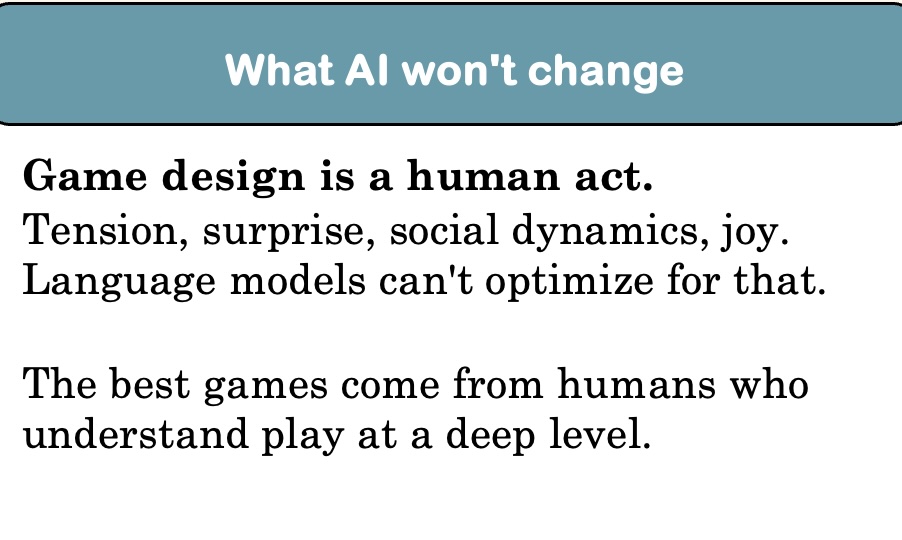
Here's what I do believe:
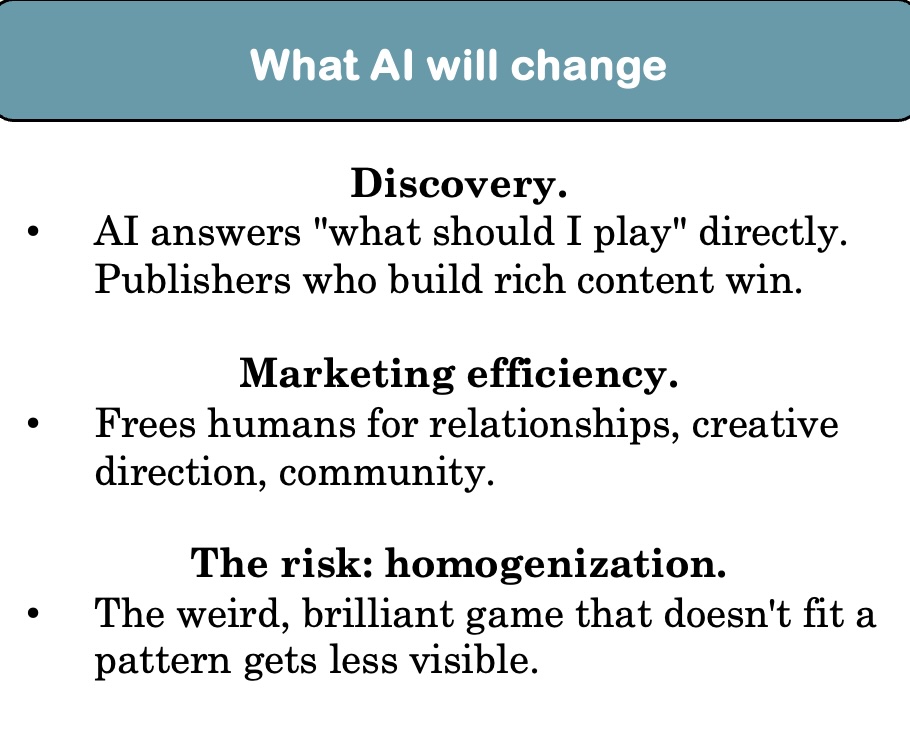
Discovery is already changing
When someone types "what board game should I get for a family of four who loves trivia but hates long setup times," AI systems are increasingly giving direct answers—not links. The games that show up in those answers will be shaped by the content the industry creates. Publishers who invest in rich, structured, accessible information about their games will have an advantage.
Marketing efficiency will shift
The work of writing product descriptions, localizing content, creating ad variations—AI compresses this dramatically. That frees humans for the higher-leverage work: relationships, creative direction, community building.
The risk
The risk is homogenization. If everyone is using the same tools to optimize for the same signals, discovery gets narrower. The weird, original, brilliant game that doesn't fit a pattern gets less visible. That's something this industry should care about—deeply.
I genuinely don't think AI threatens what makes this industry special. But it will change the plumbing. And the people who understand the plumbing will have more control over what gets surfaced.
Digital Overload Is Tabletop Gaming's Greatest Tailwind
I've saved this one for last because I think it's the most important—and because it's the most counterintuitive.
For years, the narrative in this industry was anxiety. Digital is coming. Video games are the enemy. Screens are killing attention spans. Tablets are replacing board games.
I think that framing is exactly backwards.
Here's what I've watched happen over the last decade: the more saturated our digital lives become, the more people crave something else. Something physical. Something that requires you to be in the same room as another person. Something that doesn't send you notifications.
The pandemic was the most extreme version of this. When people couldn't be together, they desperately wanted games. Puzzle sales went through the roof. Tabletop gaming surged. People who hadn't played a board game since childhood were pulling Monopoly out of closets—or discovering Wingspan for the first time.
That wasn't a fluke. That was a preview.
Think about what a board game actually is in 2026.
It is permission to put your phone down.
It's a structured reason to make eye contact with someone you love.
It's a conversation you can have with your teenager without them looking at a screen—because you're not looking at a screen either.
Parents know this. Teachers know this. Therapists know this.
The cultural moment we're living in—the anxiety about screen time, the loneliness epidemic, the mounting evidence that unstructured social connection is genuinely good for mental health—this is our moment.
The games industry is the alternative to digital culture. We're the thing people reach for when they want to feel human again.
We are the original social network.
And in a world drowning in feeds and notifications and algorithmic content—the value of gathering around a table, touching cardboard, arguing about rules, laughing too loud—that value is going up.
My prediction: the digital age won't diminish tabletop gaming. It will make shared, in-person experiences more valuable than ever. Digital overload is our tailwind.
Toward the Table
Some of the most respected people and institutions in this industry have spent decades building community around play, preserving its history because they believed that history mattered, and operating specialty retail because they believed that expert curation, human recommendation, and a physical space dedicated to play matter enormously. I believe them all.
Earlier, I mentioned being employee number four at What Do You Meme?. What I didn't mention is what that actually felt like. It was four people, a card game, and an Instagram account, betting that something real could come from people just wanting to laugh together.
That was the start. Today I run Asmodee's operations across the U.S., which means brands like CATAN and Ticket to Ride are part of what I work on every day. Different games, different rooms, but I've spent every year since chasing that same feeling—watching people put their phones down. Watching a stranger become a friend over a board for forty-five minutes. Watching a kid beat their grandfather and not be able to stop grinning about it.
That's the reason for this industry. And it's why, almost twenty years in, I'm still here.
The four predictions above are really one prediction in four parts: the future of this industry belongs to the people who understand why people play.
What games they buy. What channels they use. And most importantly—why they play. What they're looking for when they sit down at a table.
They're looking for connection. They're looking for laughter. They're looking for the feeling of being fully present with people they care about.
That's what we sell. That's what we've always sold.
And if you ask me where board gaming is headed next—I think it's headed exactly where it's always gone when it's at its best.
Toward the table.



Recent Blogs

The Bloom Report
The Smart Way Toy Brands Are Finding Retailers Between Trade Shows
The Bloom Report
Where Is Board Gaming Headed Next?

Press Release
Small businesses cannot keep absorbing this.

Press Release
A Game Studio Launches Proof-of-Play™ Publishing Initiative
Reviews
Film Review: Toy Story 5
See more
Recent Wiki
BOOK REVIEWS
Film Review: Toy Story 5

BOOK REVIEWS
Film Review: Free to Play
PEOPLE
Howard “Quiggly” Chang Talks Designing Teenage Mutant Ninja Turtles Toys, Ancientz and more!
COMPANIES
Two Small Businesses, One Big Leap of Faith: Baby Paper and Paper Cow Join Forces on a New Collaboration
MISCELLANEOUS
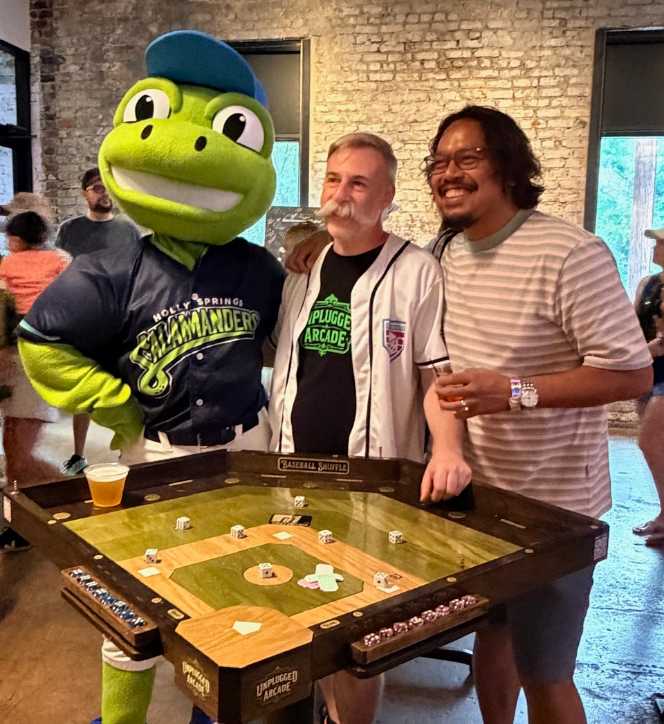
Former LEGO Master Designer Launches Unplugged Arcade
See more
POP's Got Talent

POP Entertainment
Randy Klimpert Shares his Ukulele Collection
POP Entertainment
Steve Casino Peanut Art
POP Entertainment
Everyone's Talking about POP!
POP Entertainment
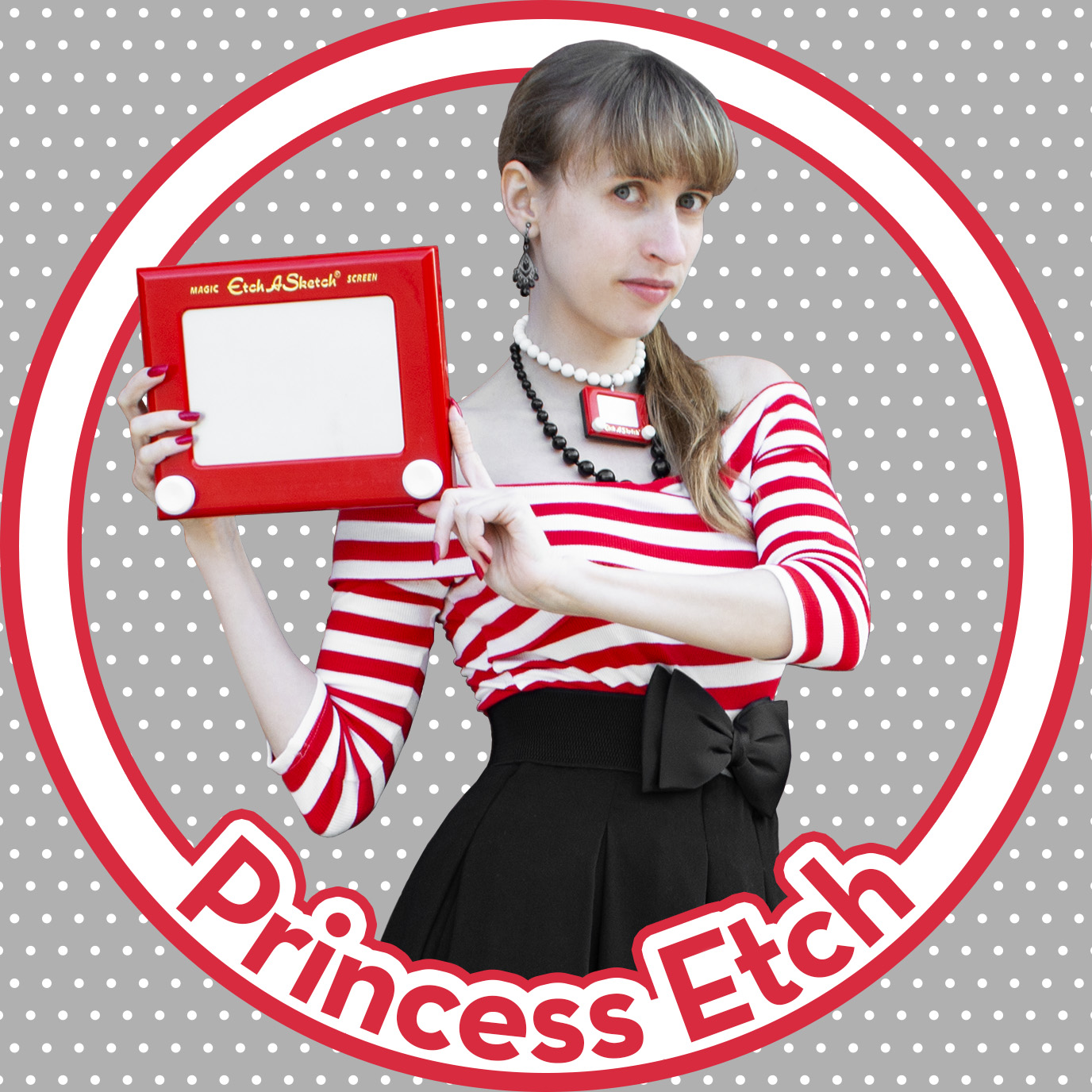
Princess Etch - a Multi-Talented Etch A Sketch Artist
POP Entertainment
Joseph Herscher of Joseph' s Machines.
See more
Recent POPcast
Hidden Role: The Brains Behind your Favorite Games
Brent Bushnell talks Two Bit Circus, VR, & STEAM (Part 1)
Hidden Role: The Brains Behind your Favorite Games
Tim Walsh Celebrates the 30th Anniversary of Blurt!
Hidden Role: The Brains Behind your Favorite Games
Connie Vogelmann designed Apiary & Wyrmspan!

Hidden Role: The Brains Behind your Favorite Games
Bob Fuhrer... Is THE Crocodile Dentist!

Hidden Role: The Brains Behind your Favorite Games
Tom Dusenberry... Bought Atari, Wizards of the Coast, and Avalon Hill!
See more
POPDuos

POPDuos: Interviews with Legends and Leaders
POPDuo: Richard Dickson, Mattel’s President & COO, and Kedar Narayan, Young Inventor Challenge AMB

POPDuos: Interviews with Legends and Leaders
POPDuo: Will Shortz and Josh Wardle

POPDuos: Legends and Leaders Explore Creativity
POP Duo: Elan Lee, Co-Founder, Exploding Kittens.and Jeff Probst, Host and Exec Producer, Survivor

POPDuos: Legends and Leaders Explore Creativity
POP Duo: David Fuhrer, MNG Director, Blue Sq Innovations & Shawn Green, past Dodgers & Mets MLB Star

POPDuos: Legends and Leaders Explore Creativity
POP Duo: Bob Fuhrer, Founder, Nextoy and Tom Fazio, Golf Course Designer
See more
Featured Articles
The Bloom Report
Toy Inventors--The Heart and Soul of the Industry
The Bloom Report
Brian Turtle: 'Endless' Stories, Advice, Kevin Bacon and More! tBR Person of the Week
Biographies and Interviews
Jonathan Levy on Jon2.0 - from Co-Founding Mastermind Toys to Spin Master
Biographies and Interviews
Andrew Perlmutter's Journey from Glencoe to Funko with Crazy Ideas that turned out Golden
See more