Chris Byrne Chats About His New Book "How To Cremate A Parakeet"
by Christopher Byrne | 29 Sep 2026
The Bloom Report
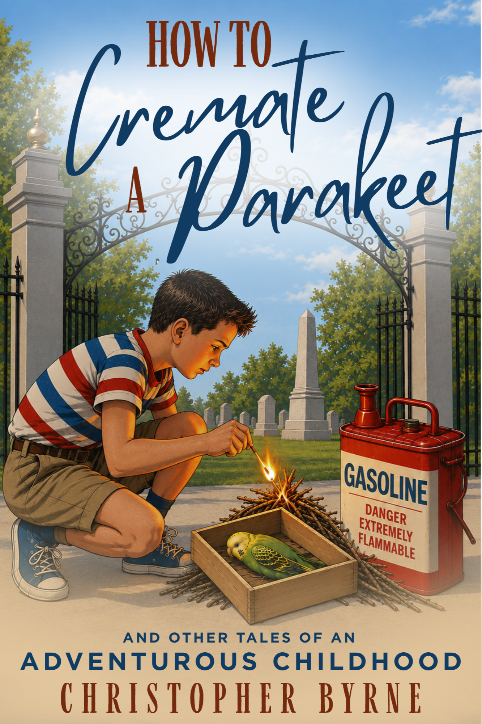
Hi Chris! Thanks for taking the time to speak with us! First things first — how DO you cremate a parakeet? 😊 And when did you realize that particular childhood adventure had to become the title of the book?
Well, it should probably have been called How to NOT Cremate a Parakeet, since we failed. We ended up burying what was left of poor Squeaky the parakeet after our best efforts. However, he (We only presumed it was a “he.” Got the full liturgy as compensation.)
I think the title came from one of the underlying themes of the book, which is trying to express how children grow in understanding of the world as they experience it—and as their brains develop. We were very enmeshed in our church, and as a kid of Irish heritage we had been going to funerals as long as I could remember.
So, the title is an oblique reference to one of the key milestones in a child’s life—understanding mortality—but in a way that makes sense to a child.
You describe your generation as the “children of benign neglect.” What did kids gain from having hours when adults simply weren't paying attention?
We had our own culture. We had to solve our own problems, resolve our own disputes, deal with our triumphs and hurt feelings and a full range of experience in the context of our understanding.
Parents—or adults—were always around in an emergency, but we took a lot of pride in being “big” in creating our own world and our own fun. It’s doubtful that half the things we came up with any adult would ever imagine.
Think of it this way: How often have toy designers been surprised about the ways in which a child used a specific toy? We were in control of the experience, and it made its own kind fo sense to us.
The book is a love letter to mischief. What's the difference between the kind of mischief you think is good for kids and behavior that crosses the line?
This is a critical distinction. We had hard-and-fast rules about behavior, what was right and wrong, and we really adhered to those. We also kept our peers in line. In that way we were self-policing. For instance, we would play hide-and-seek in the graveyard, a game we called “Graveyard Creeps,” but when some kids actually knocked over some of the stones, that as a scandal.
I credit our parents and all the adults in our lives with giving us a strong moral compass. We internalized that, and our freedom was also a privilege and one we wanted to hold onto. When an adult said, “I trust you,” that was huge for us.
You write about kids having room “to invent, to fail, to figure things out — no adult required, no permission asked.” After spending your career in the world of toys and play, do you think that freedom helped shape the Toy Guy you eventually became?
We had no governors on our imaginations. To quote a Sondheim lyric, “everything was possible, and nothing made sense.” When I look at toys today, I look at the possibility, the play experience and the way a child’s imagination completes the toy and gives it purpose. The child should always be the center of the play experience.
If you could give today's kids one thing from your childhood that you think they're missing, what would it be?
It was okay to fail. Some of our harebrained ideas failed miserably, and other kids made fun of us. We didn’t care. We moved on to the next thing, if something wasn’t working. We didn’t have to worry about an outcome when we played. There was a lot of freedom to ask “what if?” instead of saying “Oh, I better not.”
We didn’t have adult experts telling us how to play. I think giving kids the chance to resolve their own minor issues builds confidence and independence.
I think that’s all summer up in my mother’s comment when we finally told her some of these stories, “I’m so glad I didn’t know that at the time.”
And the reverse: Is there anything about childhood today that you think is actually better than when we were growing up?
Oh, I think the access to information today is incredible. When we got interested in a topic (My older brother and I spent the summer after my fourth-grade year completely obsessed with The Reign of Terror, down to stabbing each other in the bathrub with rubber daggers) we had limited resources, our local library or our encyclopedia was about it. Today, kids who are interested in something have so many ways to find out more about it—from sharks to dinosaurs to space.
Adults sometimes forget how kids can really get into a topic—and that knowledge is a kind of currency for kids.
Parents today are under enormous pressure to supervise, schedule and protect their children. How can parents give kids more independence and room for mischief without feeling like they're being irresponsible?
The media has scared parents into thinking that kids are much more vulnerable than they are. The work of Lenore Skenazy and the foundation Let Grow is full of great ideas to give kids more leeway and freedom, not to mention statistics about how safe kids really are.
Our parents came from the perspective that if we were fed, clothed, educated, had a safe place to sleep and had clear boundaries and modeling of appropriate behavior, that when we were off in “kid world,” (no adults allowed), we would be okay.
There’s one story in particular in the book that might be upsetting to people—more so than it was for me. Of course, we want kids safe, but we also need to understand that kids are pretty resilient and allow them to process experience in their own way.
Has writing this book changed the way you think about toys? Are there toys or kinds of play that naturally encourage the independence, imagination, risk-taking and problem-solving you remember from childhood?
Whenever the child is at the center of the play experience, development is naturally encouraged. It can be entertaining or curricular, but the engagement of the child’s mind and imagination is everything. We grew up with a balanced toy box—games, Matchbox Cars, sports equipment (I was terrible.), bikes, arts and crafts, and so much more. Plus, we read voraciously.
It hasn’t changed how I think about toys so much as it’s made me think that the best play is kid-centric and kid-directed and however that kids wants to express themselves at any given time. Let’s see what happens when…
You’ve spent decades watching children play and watching the toy industry evolve. Do you think we sometimes design too much of the play for kids today instead of giving them the tools to invent the play themselves?
I think it’s a balance. I’m not opposed to “watch me” toys when they’re hot and one part of a total play experience, for instance. We’ve done a lot of play sessions over the years where we just sit back and let kids follow their own interests. And, no surprise, it can vary by the day, the kid, the toy, so many factors.
The one thing I know is that the market will always tell you if you’ve succeeded or failed.
What surprised you most while writing the book — was there a childhood memory that you understood completely differently looking back at it as an adult?
It wasn’t so much when I was writing the book as when I was telling some of these stories. I was surprised to hear that kids from all over had the same ideas at the same time—with no Internet—it just happened.
The case in point is that we thought we were so smart that we thought if we could figure out how to break the streetlight on our corner, we would have a plausible excuse for not coming in when it went on. I was amazed to discover how many kids from all over the country had all had the same idea. That’s how kids think!

BONUS: If 10-year-old Chris Byrne were dropped into 2026 for one completely unsupervised Saturday afternoon — no phone, no adults and no schedule — what trouble would he get into? 😊
Well, folks who know me know I was always partial to blowing things up. But say that’s not possible, I would want to gather whatever friends I could and see what we wanted to come up with together. When I reflect back on it, the fun always came from being connected to other kids and being in our own, independent world.
Related Blogs






Recent Blogs
The Bloom Report
Chris Byrne Chats About His New Book "How To Cremate A Parakeet"
The Bloom Report
The Toy Association & UIA’s Toy Hub Bring Toy & Game Inventors Together in LA

Press Release
“CARVE-X” MAKES LANDMARK MOVE TO THE JAVITS CENTER FOR TOY FAIR 2027
Press Release
People of Play™ Announces Speaker Lineup for 2026 Global Inventor Pitch & Innovation Conference
Reviews
Game Review: Smack N Cheese
See more
Recent Wiki
BOOK REVIEWS
Game Review: Yahtzee

COMPANIES
Spielwarenmesse Invitation for game authors: Registration until 15 December 2026
BOOK REVIEWS
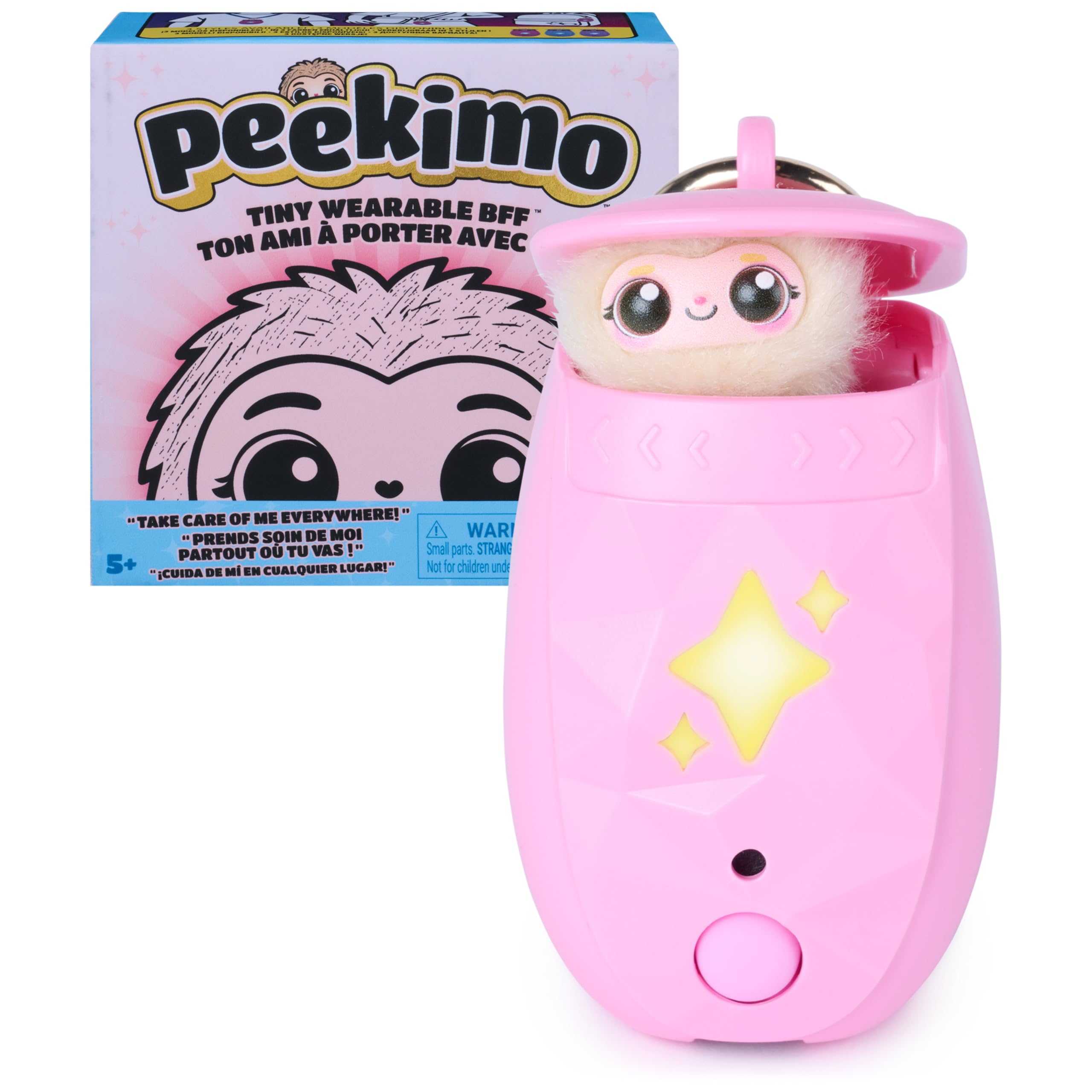
Game Review: Peekimo
PEOPLE
Peter Cullen and the Voice That Helped Transform a Toy into an Icon
PEOPLE
Fei Feng Talks Growing Orbio, Leading with Joy, Inspirations and More!
See more
POP's Got Talent

POP Entertainment
Randy Klimpert Shares his Ukulele Collection
POP Entertainment
Steve Casino Peanut Art
POP Entertainment
Everyone's Talking about POP!
POP Entertainment
Princess Etch - a Multi-Talented Etch A Sketch Artist
POP Entertainment
Joseph Herscher of Joseph' s Machines.
See more
Recent POPcast

Hidden Role: The Brains Behind your Favorite Games
Brent Bushnell talks Two Bit Circus, VR, & STEAM (Part 1)

Hidden Role: The Brains Behind your Favorite Games
Tim Walsh Celebrates the 30th Anniversary of Blurt!
Hidden Role: The Brains Behind your Favorite Games
Connie Vogelmann designed Apiary & Wyrmspan!

Hidden Role: The Brains Behind your Favorite Games
Bob Fuhrer... Is THE Crocodile Dentist!

Hidden Role: The Brains Behind your Favorite Games
Tom Dusenberry... Bought Atari, Wizards of the Coast, and Avalon Hill!
See more
POPDuos

POPDuos: Interviews with Legends and Leaders
POPDuo: Richard Dickson, Mattel’s President & COO, and Kedar Narayan, Young Inventor Challenge AMB

POPDuos: Interviews with Legends and Leaders
POPDuo: Will Shortz and Josh Wardle

POPDuos: Legends and Leaders Explore Creativity
POP Duo: Elan Lee, Co-Founder, Exploding Kittens.and Jeff Probst, Host and Exec Producer, Survivor
POPDuos: Legends and Leaders Explore Creativity
POP Duo: David Fuhrer, MNG Director, Blue Sq Innovations & Shawn Green, past Dodgers & Mets MLB Star

POPDuos: Legends and Leaders Explore Creativity
POP Duo: Bob Fuhrer, Founder, Nextoy and Tom Fazio, Golf Course Designer
See more
Featured Articles
The Bloom Report
Toy Inventors--The Heart and Soul of the Industry
The Bloom Report
Brian Turtle: 'Endless' Stories, Advice, Kevin Bacon and More! tBR Person of the Week
Biographies and Interviews
Jonathan Levy on Jon2.0 - from Co-Founding Mastermind Toys to Spin Master
Biographies and Interviews
Andrew Perlmutter's Journey from Glencoe to Funko with Crazy Ideas that turned out Golden
See more